High Protein Doesn't Always Mean Healthy
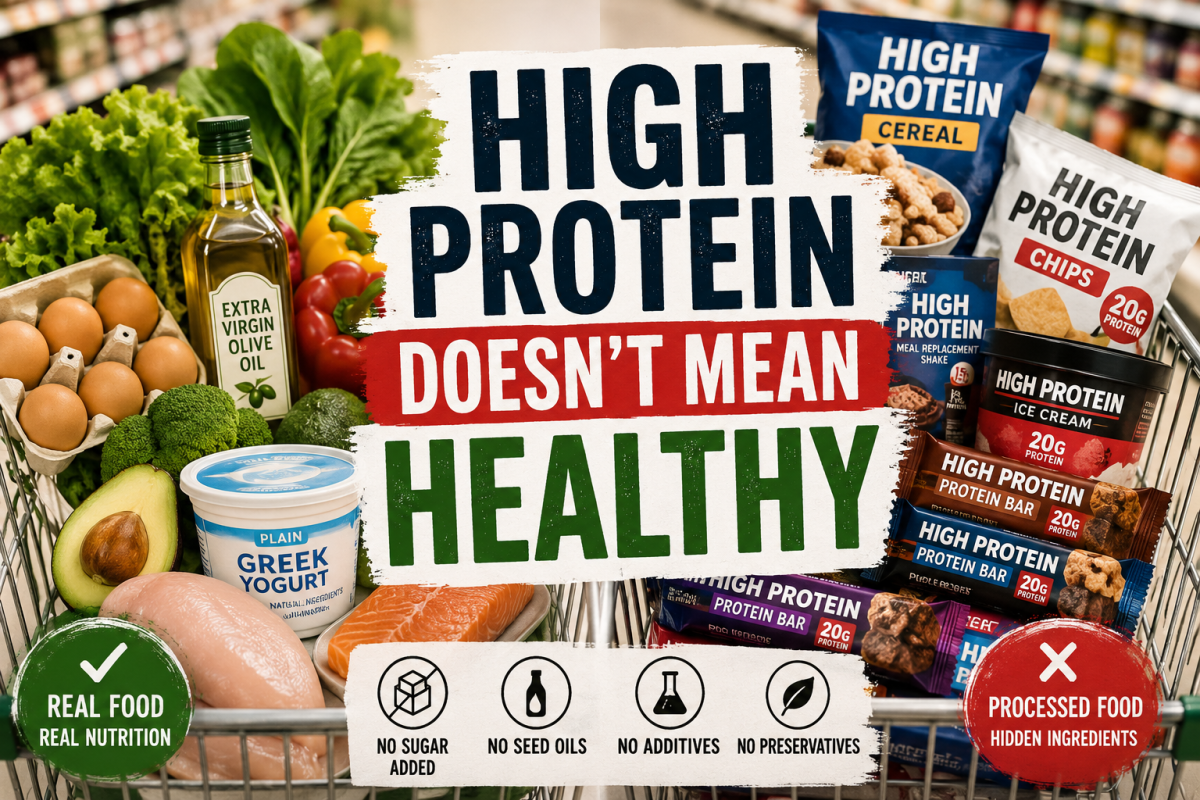
Walk through any grocery store today and you'll see “High Protein” splashed across everything from cereal and yogurt to cookies, candy bars, chips, and even ice cream. While getting enough protein is important for building muscle, supporting metabolism, and staying full longer, the words “high protein” do not automatically mean healthy.
Many of these products are little more than ultra-processed junk food with extra protein added. If you're trying to eat healthier, it's important to look beyond the protein number on the front of the package and read the ingredient list.
Don't Be Fooled by the Marketing
Food manufacturers know that consumers are looking for healthier options. That's why they highlight protein while hoping you'll overlook everything else that's inside.
A protein bar may contain 20 grams of protein, but it may also include:
Large amounts of added sugar
Refined seed oils
Artificial sweeteners
Artificial flavors and colors
Preservatives
Emulsifiers and other chemical additives
The result? You're still eating an ultra-processed food.
What Makes a Food Truly Healthy?
Instead of focusing on a single nutrient, look at the entire ingredient list.
Choose foods that are:
High in quality protein
Free of added sugar whenever possible
Made without industrial seed oils
Free from unnecessary additives and preservatives
Made with simple, recognizable ingredients
The fewer ingredients, the better.
Watch Out for Hidden Sugar
Sugar hides under dozens of different names, including:
High fructose corn syrup
Brown rice syrup
Cane syrup
Corn syrup solids
Dextrose
Maltodextrin
Agave nectar
Evaporated cane juice
Even foods marketed as “healthy” can contain surprising amounts of added sugar.
Avoid Industrial Seed Oils
Many processed foods use inexpensive seed oils because they're cheap and have a long shelf life.
Common seed oils include:
Soybean oil
Corn oil
Canola oil
Cottonseed oil
Sunflower oil
Safflower oil
Grapeseed oil
Rice bran oil
These oils are heavily refined and are found in many packaged foods, frozen meals, salad dressings, crackers, chips, and protein snacks.
Instead, look for healthier fats such as:
Extra virgin olive oil
Avocado oil
Coconut oil
Butter from grass-fed cows
Beef tallow
Ghee
The Problem with Additives and Preservatives
Many processed foods contain ingredients designed to improve texture, color, shelf life, or flavor—not your health.
Common additives include:
Artificial colors
Artificial flavors
Carrageenan
Sodium benzoate
Potassium sorbate
BHA and BHT
MSG
Polysorbates
Modified food starches
While not every additive is harmful, eating fewer processed foods naturally reduces your exposure to unnecessary chemicals.
Build Your Protein Around Real Food
The healthiest protein sources don't need flashy labels.
Choose foods like:
Eggs
Chicken
Turkey
Beef
Fish
Cottage cheese
Plain Greek yogurt
Beans and lentils
Nuts and seeds (if tolerated)
Homemade bone broth
These foods provide protein along with vitamins, minerals, and healthy fats without the long list of artificial ingredients.
Read the Ingredients Before the Nutrition Label
The nutrition facts panel tells you how much protein a product contains.
The ingredient list tells you what you're actually eating.
A simple rule is this:
If the ingredient list reads like a chemistry experiment, leave it on the shelf.
Final Thoughts
Protein is an important part of a healthy diet, but it isn't the only thing that matters. A truly healthy food should nourish your body, not simply advertise one impressive number on the package.
Focus on whole, minimally processed foods that are free from added sugars, industrial seed oils, unnecessary additives, and preservatives. Your body will thank you for choosing real food over clever marketing.
Remember: High protein is a benefit—but clean ingredients are what make a food truly healthy.