How to Make Your Own Gluten-Free Flour Blends
When I first started eating gluten-free, one of the biggest surprises was realizing that there wasn’t one magical flour that could replace wheat flour.
Wouldn’t that have been nice?
Instead, gluten-free baking usually works best when you combine several different flours and starches. One gives you structure. Another keeps things light. Another adds softness. Then you may need a binder such as xanthan gum or psyllium husk to help hold everything together.
It sounds complicated at first.
But once you understand what each ingredient does, making your own gluten-free flour blends is actually pretty simple—and it gives you a lot more control over your baking.
Why Mix Gluten-Free Flours?
Wheat flour does a lot of jobs at once.
It provides structure, absorbs moisture, develops gluten, holds air bubbles, and helps create the texture we expect in bread, cakes, cookies, and other baked goods.
Most gluten-free flours can’t do all of those things by themselves.
For example, rice flour can provide structure, but too much can make baked goods dry or gritty. Tapioca starch can add chew and elasticity, but you probably wouldn’t want to bake a loaf of bread using nothing but tapioca starch.
The solution is to blend them together.
A good gluten-free flour blend usually contains a combination of:
Whole-grain or base flours + starches + sometimes a binder.
Each ingredient has a job.
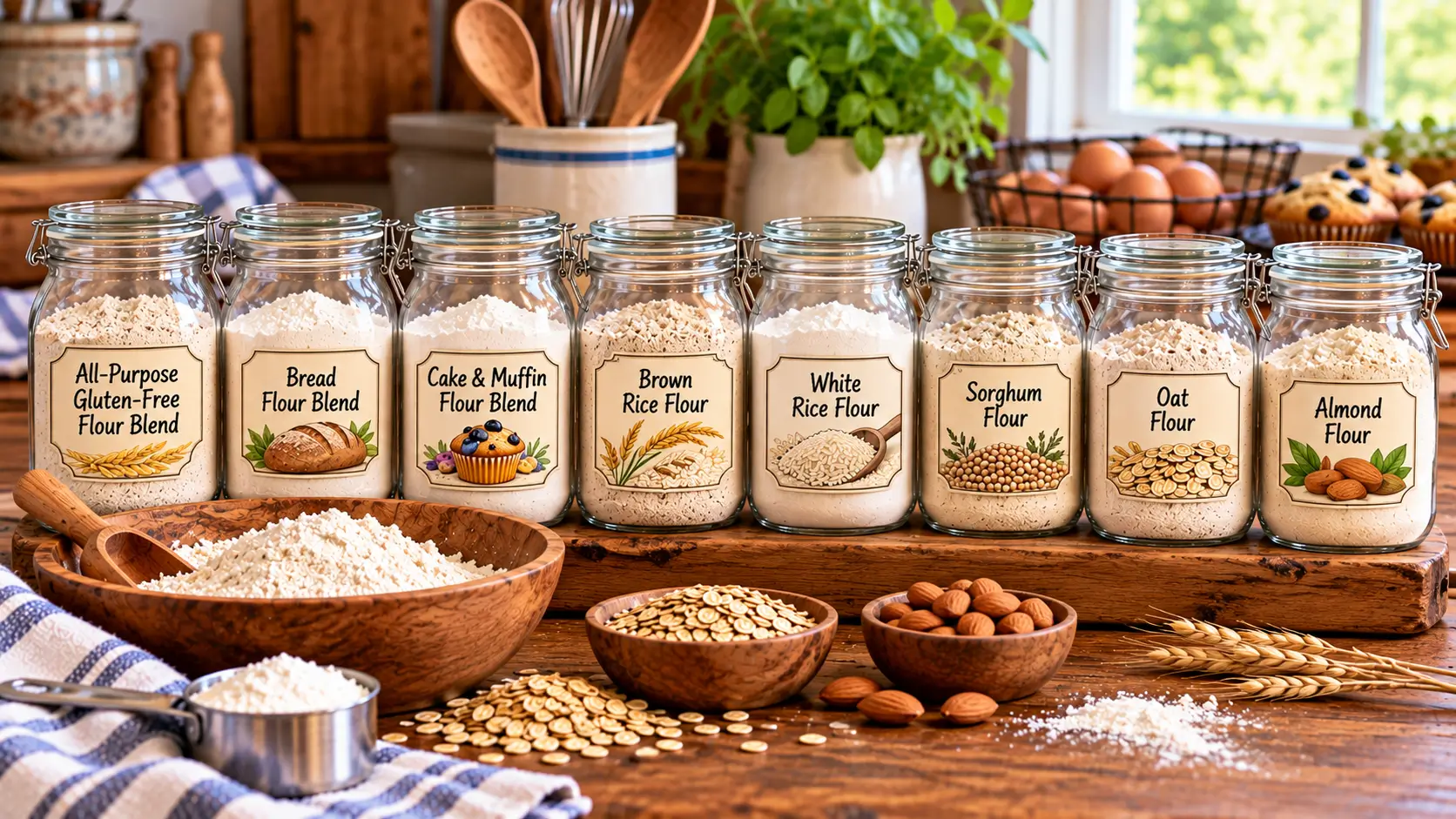
Brown Rice Flour
Brown rice flour is one of my favorite basic ingredients for a general-purpose gluten-free blend.
It has more flavor than white rice flour and provides structure and substance to baked goods.
It works well in:
- Breads
- Muffins
- Pancakes
- Cookies
- Quick breads
- All-purpose flour blends
Because it can produce a slightly heavier texture, I usually combine it with starches rather than using it alone.
White Rice Flour
White rice flour has a milder flavor than brown rice flour and is another popular base for gluten-free flour blends.
It’s fairly neutral, which makes it useful when you don’t want the flour competing with the other flavors in your recipe.
The downside?
Poorly milled rice flour can sometimes produce that gritty texture gluten-free baking has become famous for.
Using finely milled rice flour makes a big difference.
Sorghum Flour
Sorghum flour is one of those ingredients I think deserves more attention.
It has a mild, slightly sweet flavor and works especially well in breads, muffins, pancakes, and other baked goods.
Sorghum can help give a flour blend more body without overpowering the recipe.
I particularly like it as part of a bread blend rather than using rice flour for everything.
Oat Flour
Oat flour adds a soft texture and slightly sweet flavor to baked goods.
It’s wonderful in:
Cookies, muffins, pancakes, quick breads, and cakes.
You can buy oat flour or make your own by grinding oats very finely.
If you need your baking to be strictly gluten-free, use oats specifically labeled gluten-free because ordinary oats can be exposed to wheat and other gluten-containing grains during growing, processing, transportation, or packaging.
Buckwheat Flour
Despite the name, buckwheat isn’t wheat.
It’s naturally gluten-free and has a strong, earthy flavor.
Buckwheat works beautifully in pancakes, hearty breads, waffles, and rustic baked goods.
Because the flavor is stronger, I generally wouldn’t make it the main ingredient in an all-purpose blend unless I specifically wanted that flavor.
Almond Flour
Almond flour is another naturally gluten-free option, but it behaves very differently from grain-based flours.
Because almonds contain fat and protein, almond flour can make baked goods moist, rich, and tender.
It’s fantastic for cookies, cakes, muffins, and certain breads.
However, almond flour isn’t usually a simple cup-for-cup replacement for a rice-flour-based blend. Recipes designed specifically for almond flour tend to work much better.
Tapioca Starch
Now we get to the starches.
Tapioca starch, sometimes called tapioca flour, can help add elasticity, softness, and chew.
It is especially useful in:
Bread, pizza crust, rolls, tortillas, and baked goods where you want some flexibility.
But too much can make your finished product overly chewy or gummy.
Again, balance is everything.
Potato Starch
Potato starch can help make gluten-free baked goods soft and tender.
It’s especially useful in cakes, breads, muffins, and flour blends.
One important distinction:
Potato starch and potato flour are NOT the same thing.
Potato starch is the refined starch extracted from potatoes.
Potato flour is made from dried potatoes and behaves differently.
If your recipe calls for potato starch, don’t automatically replace it with potato flour.
Cornstarch
Cornstarch is another inexpensive and easy-to-find starch that can lighten a gluten-free flour blend.
It works particularly well in cakes, cookies, biscuits, and other baked goods where you want a tender texture.
Of course, if you’re avoiding corn, you can build a perfectly good blend using other starches.
Arrowroot Starch
Arrowroot starch is another option for adding lightness and helping bind ingredients.
It has a fairly neutral flavor and can be useful in cookies, cakes, muffins, pancakes, and sauces.
It’s also handy when you’re trying to make a gluten-free blend without corn.
My Basic Gluten-Free All-Purpose Flour Blend
Here’s a simple place to start.
Ingredients
- 2 cups finely milled brown rice flour
- 1 cup white rice flour
- 1 cup tapioca starch
- 1 cup potato starch
Directions
Whisk all the ingredients together extremely well.
Don’t just give it a couple of stirs and call it finished. You want the different flours and starches distributed evenly throughout the mixture.
Transfer the blend to an airtight container or large mason jar.
Label it so six months from now you’re not standing in the pantry wondering what the mysterious jar of white powder is.
Been there.
Use this blend for recipes such as muffins, pancakes, quick breads, cookies, cakes, and other everyday baking.
For yeast breads, I usually prefer a blend designed specifically for bread.
Gluten-Free Bread Flour Blend
Bread needs more structure and elasticity than a cake or cookie, so I like a slightly different combination.
Ingredients
- 2 cups brown rice flour
- 1 cup sorghum flour
- 1 cup tapioca starch
- 1 cup potato starch
Mix thoroughly and store in an airtight container.
When making bread, you’ll usually combine the flour blend with a binder such as psyllium husk or xanthan gum, depending on the recipe.
Don’t automatically add the binder directly to your big container of flour blend.
Keeping it separate gives you more flexibility because different recipes require different amounts.
Simple Gluten-Free Cake and Muffin Blend
For softer baked goods, try:
Ingredients
- 2 cups white rice flour
- 1 cup tapioca starch
- 1 cup potato starch
This lighter blend can work nicely for cakes, muffins, cupcakes, pancakes, and other recipes where you want a softer texture.
Again, add xanthan gum or another binder only when the individual recipe requires it.
A Simple Formula for Creating Your Own Blend
If you want to experiment, start by thinking in terms of flours and starches rather than searching for one perfect gluten-free flour.
A good starting point is roughly:
60–70% gluten-free flour
and
30–40% starch
From there, you can adjust the mixture depending on what you’re making.
Want something lighter?
Increase the starch slightly.
Want something heartier?
Use more brown rice flour, sorghum, oat flour, or another whole-grain flour.
Want more chew in bread or pizza crust?
Tapioca starch can help.
That’s where gluten-free baking becomes fun. Once you understand the ingredients, you can start adjusting recipes instead of blindly following them and hoping for the best.
Should You Put Xanthan Gum in Your Flour Blend?
You certainly can, and many commercial gluten-free flour blends do.
Personally, I prefer not to add xanthan gum directly to my homemade all-purpose blend.
Why?
Because different recipes need different amounts.
A cake, cookie, pizza crust, and loaf of yeast bread don’t necessarily need the same amount—or even the same type—of binder.
One recipe might work beautifully with xanthan gum while another is better with psyllium husk.
Keeping the binder separate gives you more control.
Measure by Weight When You Can
Cups are convenient, and I use them plenty.
But gluten-free flours can pack differently into measuring cups.
If you really want consistent results, a small digital kitchen scale is one of the best tools you can have for gluten-free baking.
Once you find a blend you love, write down the weights of each ingredient.
Then you can reproduce the exact same blend every time.
Make a Big Batch
Once you’ve found a flour blend you use regularly, make a larger batch and keep it in your pantry.
That’s one of my favorite ways to make gluten-free cooking easier.
Instead of pulling four bags of flour out every time you want pancakes, you pull out one jar.
Measure.
Bake.
Done.
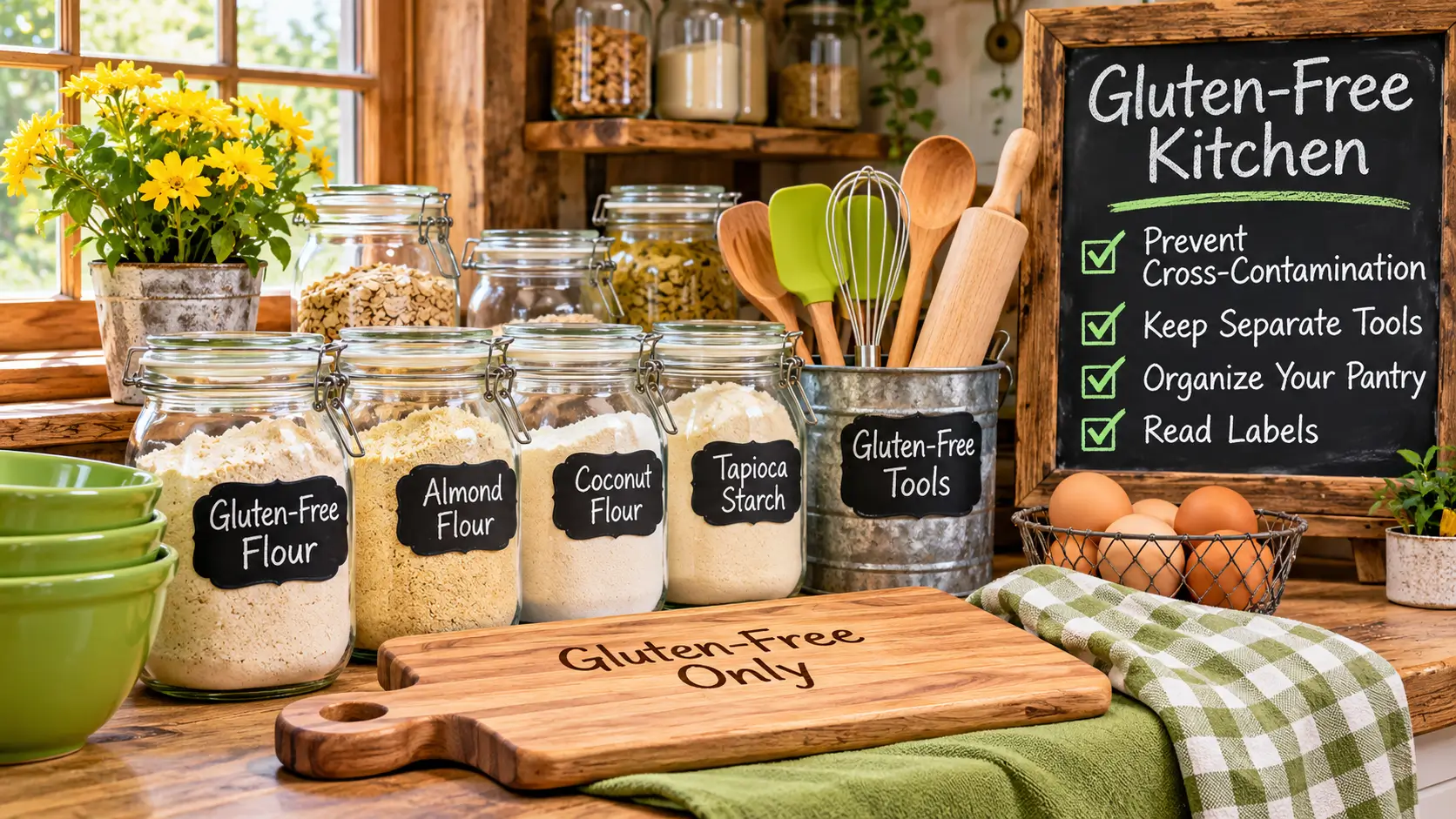
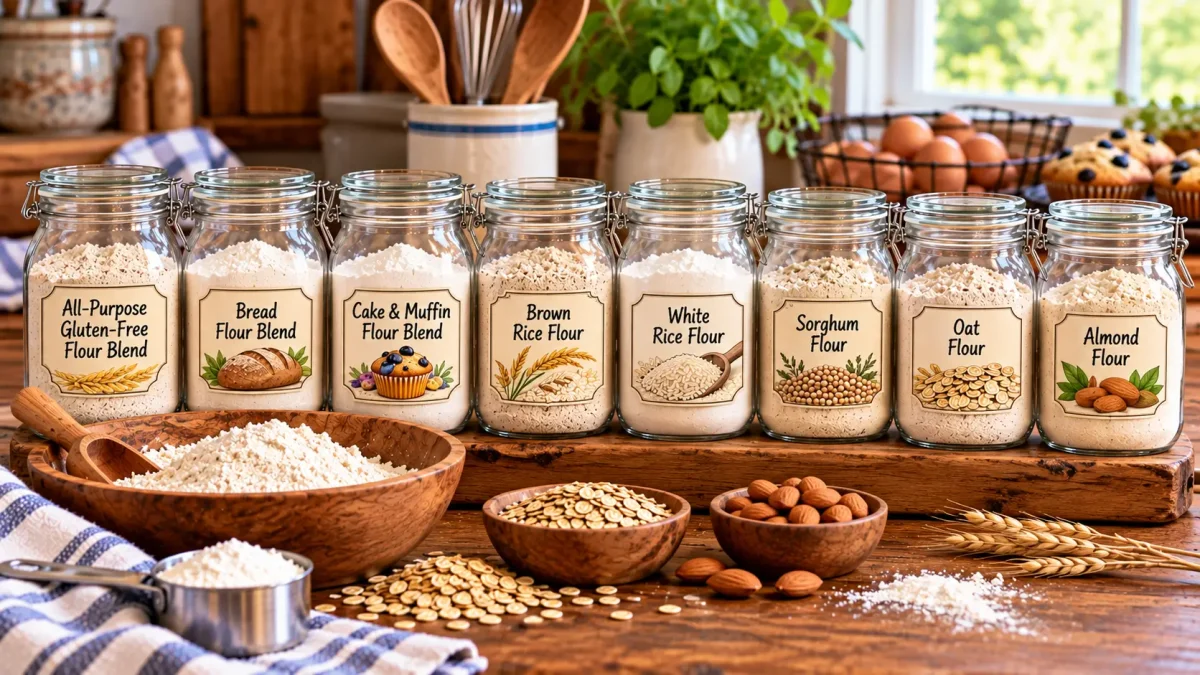
I like storing homemade flour blends in airtight containers or mason jars with a label showing exactly what’s inside.
You can even put the recipe for the blend right on the label.
That way, when the jar starts getting low, you don’t have to hunt around trying to remember what you put in it.
One Blend Won’t Do Everything
This might be the most important thing I’ve learned about gluten-free baking.
There isn’t necessarily one perfect flour blend for every recipe.
The blend that makes a beautiful cake may not make the best sandwich bread.
The flour combination that makes a chewy pizza crust might make terrible sugar cookies.
And that’s okay.
Once you stop expecting gluten-free flour to behave exactly like wheat flour, gluten-free baking becomes much less frustrating.
Start Simple and Experiment
You don’t need 15 different bags of exotic flour to start making your own blends.
Begin with a few basics:
Brown rice flour, white rice flour, tapioca starch, potato starch, and maybe sorghum flour.
Those ingredients give you plenty of possibilities.
Then experiment.
Write down what you change.
If something turns out fantastic, you’ll know how to make it again.
And if it turns out looking like a brick?
Well…we’ve all made a few of those too.
That’s part of learning gluten-free baking.
The goal isn’t to perfectly imitate wheat flour in every recipe. It’s to understand what each ingredient brings to the bowl and create something that’s delicious in its own right.
And once you start making your own flour blends, you may wonder why you ever paid so much for those tiny bags of premixed gluten-free flour.