Freeze Drying Food: The Pros, Cons, and Why It’s Worth It for Long-Term Food Preservation
Food preservation has come a long way, and one method that has become increasingly popular among homesteaders, gardeners, preppers, and people who simply want to become more self-sufficient is freeze drying.
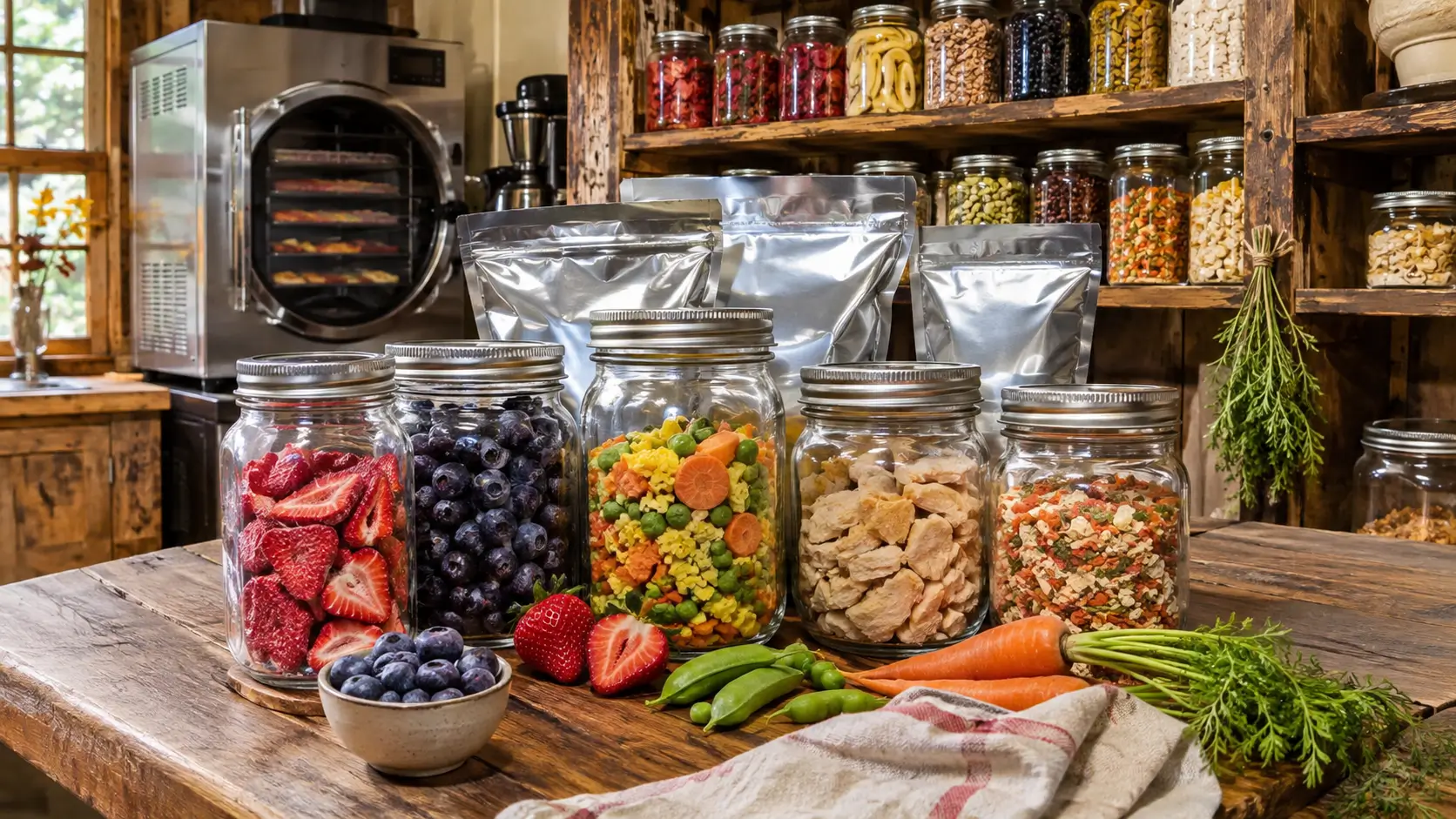
Whether you’re preparing for emergencies, preserving your garden harvest, stocking your pantry, or trying to reduce food waste, freeze drying offers some impressive advantages. It allows you to preserve a wide variety of foods for years while maintaining much of their original flavor, color, texture, and nutritional value.
But is freeze drying really worth the investment? Like any food preservation method, it has advantages and disadvantages. Let’s look at both sides and why freeze drying may be one of the best investments you can make for your food storage.
What Is Freeze Drying?
Freeze drying, also called lyophilization, is a food preservation process that removes moisture from food without using traditional heat drying.
The process works in three basic steps:
- Freezing: Food is frozen to a very low temperature.
- Primary drying: A vacuum is created inside the freeze dryer, allowing frozen water to turn directly into water vapor through a process called sublimation.
- Secondary drying: Additional moisture is removed to help make the food shelf-stable.
The result is lightweight, dry food that can be stored for extended periods when properly packaged.
Unlike traditional dehydration, freeze drying removes most of the water while helping preserve the food’s original structure.
The Pros of Freeze Drying
There are many reasons freeze drying has become so popular, especially with people interested in homesteading, preparedness, and long-term food storage.
1. Extremely Long Shelf Life
One of the biggest advantages of freeze drying is the potential for an exceptionally long shelf life.
When food is properly freeze dried, packaged in moisture- and oxygen-resistant containers, and stored in a cool, dark location, many foods can last 10 to 25 years.
This makes freeze drying an excellent option for building a long-term emergency food supply.
Imagine opening your pantry years from now and having access to fruits, vegetables, meats, soups, and complete meals that you preserved yourself!
2. Retains Much of Its Nutritional Value
Freeze drying generally preserves more nutrients than many traditional heat-based preservation methods.
Because food is frozen and moisture is removed under vacuum, it avoids the prolonged high temperatures associated with some drying techniques.
Many vitamins, minerals, and other nutrients remain well preserved, although some sensitive nutrients, particularly vitamin C, can still experience losses.
For anyone interested in healthy eating and knowing exactly what goes into their food, this is a major advantage.
3. Preserves Flavor, Color, and Texture
Freeze-dried food often retains much of its original flavor and color.
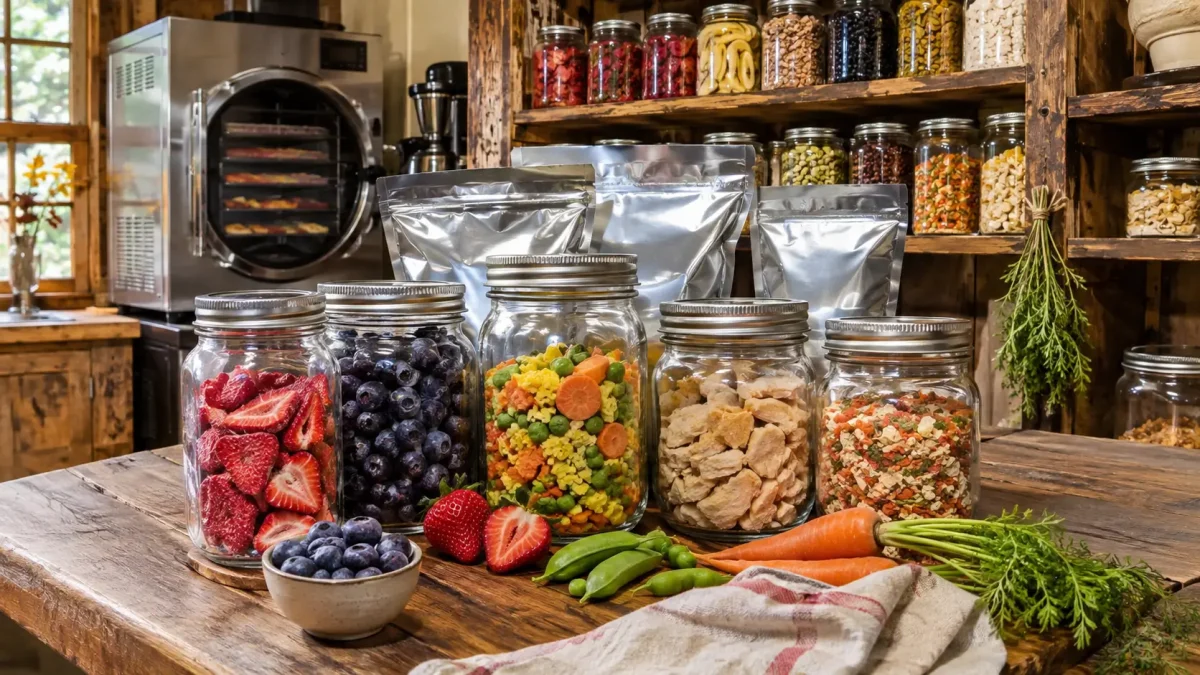
Strawberries remain recognizable strawberries, peas retain their green color, and many fruits maintain their natural sweetness.
When water is added back, many foods rehydrate surprisingly well.
This makes freeze drying useful for more than just emergency food. You can use your preserved ingredients in everyday cooking.
4. Lightweight and Easy to Store
Removing moisture significantly reduces the weight of food.
This is especially helpful when storing large quantities of food in a limited space or preparing emergency supplies.
Freeze-dried foods are also convenient for camping, traveling, and keeping in emergency kits.
5. Reduces Food Waste
Have too many tomatoes, strawberries, peppers, or zucchini coming out of your garden?
Instead of watching them spoil, you can preserve them for later.
Freeze drying allows you to take advantage of seasonal produce, bulk grocery purchases, and garden harvests.
You can preserve foods when they are fresh and enjoy them throughout the year.
6. Preserves More Than Just Fruits and Vegetables
Freeze drying is incredibly versatile.
You can preserve:
- Fruits and berries
- Vegetables
- Cooked meats
- Scrambled eggs
- Cheese
- Yogurt
- Soups and stews
- Pasta dishes
- Complete meals
- Herbs and some dairy products
You can even freeze dry leftovers, making it possible to preserve meals you have already prepared.
Always follow your machine manufacturer’s food preparation guidance, particularly for foods containing fats and oils.
7. Convenient for Emergency Preparedness
If you are building an emergency food supply, freeze drying offers something valuable: variety.
Instead of relying entirely on canned foods, rice, beans, and other pantry staples, you can store complete meals and ingredients that make emergency cooking easier.
You can prepare your own freeze-dried meals using ingredients your family already enjoys.
This is especially helpful when you want to avoid excessive preservatives, artificial ingredients, and unnecessary additives found in some commercially prepared emergency foods.
The Cons of Freeze Drying
As wonderful as freeze drying can be, there are some disadvantages to consider before purchasing a machine.
1. The Initial Cost Is High
This is probably the biggest drawback.
Home freeze dryers are considerably more expensive than dehydrators or basic canning equipment.
Depending on the manufacturer, model, and accessories, you may spend several thousand dollars to get started.
You also need to consider the cost of:
- Mylar bags
- Oxygen absorbers
- Food-grade storage containers
- Replacement parts
- Maintenance supplies
- Electricity
For someone who only wants to preserve a small amount of food occasionally, the investment may be difficult to justify.
2. The Process Takes Time
Freeze drying is not a quick preservation method.
A typical batch may take 20 to 40 hours or longer, depending on the food, moisture content, preparation, and machine settings.
Some foods take considerably longer than others.
You also need to allow time for cooling, packaging, and cleaning the equipment between batches.
Planning ahead is important.
3. Electricity Usage
Freeze dryers require electricity to operate their refrigeration systems, vacuum pumps, and heating components.
Running a machine for extended periods can increase your electric bill.
If you live somewhere with frequent power outages or are preparing for emergencies, you should also consider how you will power the machine.
A backup generator or alternative power system may be worth considering.
4. Requires Proper Packaging
Freeze-dried food is extremely vulnerable to moisture.
Once exposed to humidity, it can absorb moisture and lose its shelf stability.
Proper packaging is essential.
For long-term storage, use:
- Quality Mylar bags
- Appropriate oxygen absorbers
- Heat sealing equipment
- Food-grade storage containers
Store finished packages somewhere cool, dry, and dark.
Remember that oxygen absorbers do not replace proper moisture protection.
5. Not Every Food Freeze Dries Well
Although freeze drying works with many foods, not everything is suitable.
Foods with high fat or oil content can be problematic because fats do not freeze dry in the same way water does.
Butter, oils, peanut butter, and fatty meats are not good candidates for long-term freeze drying.
Foods with high sugar content can also be more difficult to process and may require special preparation.
Knowing which foods work well will help prevent wasted time and money.
6. Requires Space
Home freeze dryers are not small countertop appliances.
You need enough room for the machine, trays, accessories, packaging supplies, and finished food.
You also need a location with appropriate ventilation and a suitable electrical supply.
For people with limited kitchen or storage space, this can be a challenge.
Freeze Drying vs. Other Food Preservation Methods
Freeze drying isn’t the only way to preserve food. Canning, dehydrating, freezing, and fermenting all have important places in a well-stocked pantry.
Here’s how they compare:
| Preservation Method | Main Advantages | Main Disadvantages |
|---|---|---|
| Freeze Drying | Very long shelf life, lightweight, retains much of the original food quality | Expensive equipment, long processing time |
| Water Bath Canning | Affordable, great for fruits, jams, and acidic foods | Requires proper acidity and processing |
| Pressure Canning | Excellent for low-acid foods, meats, and vegetables | Requires equipment and careful processing |
| Dehydrating | Affordable, easy to use, good for fruits and vegetables | Changes texture and can reduce some nutrients |
| Freezing | Maintains good food quality and is convenient | Requires continuous electricity |
| Fermenting | Preserves food while developing distinctive flavors | Requires proper fermentation conditions and storage |
Each method has its place. The smartest approach is to use several preservation techniques rather than relying on just one.
Is Freeze Drying Worth the Investment?
For many people, absolutely!
If you regularly buy food in bulk, grow your own vegetables, hunt, raise animals, or want to build a serious emergency food supply, a freeze dryer can become an incredibly useful tool.
Think about how much food you could preserve throughout the year.
- Preserve strawberries when they are inexpensive and in season.
- Freeze dry vegetables from your garden.
- Preserve leftover meals instead of throwing them away.
- Make your own emergency meal packages.
- Store ingredients for soups, casseroles, and everyday cooking.
- Preserve homemade meals for camping and travel.
Over time, the ability to preserve food yourself can help reduce waste, take advantage of seasonal prices, and give you more control over what your family eats.
However, don’t purchase a freeze dryer simply because it sounds like a good preparedness investment. Consider how often you will use it and whether the cost makes sense for your household.
Why Freeze Drying Is Important for Self-Sufficiency
One of the biggest lessons in homesteading and preparedness is that we shouldn’t depend entirely on grocery stores to feed our families.
Being able to grow, prepare, and preserve your own food gives you more control over your household food supply.
Freeze drying adds another valuable tool to that process.
Imagine having a pantry stocked with homegrown vegetables, preserved fruits, homemade soups, meats, and complete meals.
You know what ingredients went into your food, how it was prepared, and how it was packaged.
That kind of independence is difficult to put a price on.
Freeze drying also gives you the ability to preserve food when it is plentiful so you have it available when it isn’t.
Whether you’re preparing for severe weather, supply chain disruptions, rising food prices, or simply wanting to become less dependent on grocery stores, having a variety of preserved foods is a smart step toward self-sufficiency.
Tips for Getting Started with Freeze Drying
If you’re considering purchasing a freeze dryer, here are a few tips to help you get started.
- Start with foods you already eat. There is no reason to preserve foods your family won’t enjoy.
- Take advantage of seasonal produce. Buy fruits and vegetables when they are plentiful and affordable.
- Prepare food in small, uniform pieces. This helps promote more consistent processing.
- Don’t overload your trays. Follow your manufacturer’s recommendations.
- Test your food before packaging. Make sure it is completely dry, including the centers of thicker pieces.
- Package immediately. Limit exposure to air and humidity.
- Label everything. Include the food name and preservation date.
- Rotate your food supply. Use older packages first when appropriate.
For safety, follow tested food preservation guidance for ingredients and meals. Freeze drying does not kill every harmful microorganism, and it does not make improperly handled food safe. Rehydrate foods with safe water and cook them as needed.
Final Thoughts
Freeze drying is not the cheapest food preservation method, but it offers some benefits that are difficult to match.
The long potential shelf life, lightweight storage, versatility, and ability to preserve homemade meals make it an attractive option for anyone interested in preparedness, homesteading, or becoming more self-sufficient.
Is it necessary? No.
Can you build an excellent food storage pantry using canning, dehydrating, fermenting, and freezing? Absolutely!
But if you have the budget and plan to use a freeze dryer regularly, it can be an investment that pays off in convenience, reduced food waste, and greater control over your food supply.
The goal isn’t just to store food. It’s to build a reliable food supply that gives your family more choices, more security, and more independence.
And that is something worth investing in!