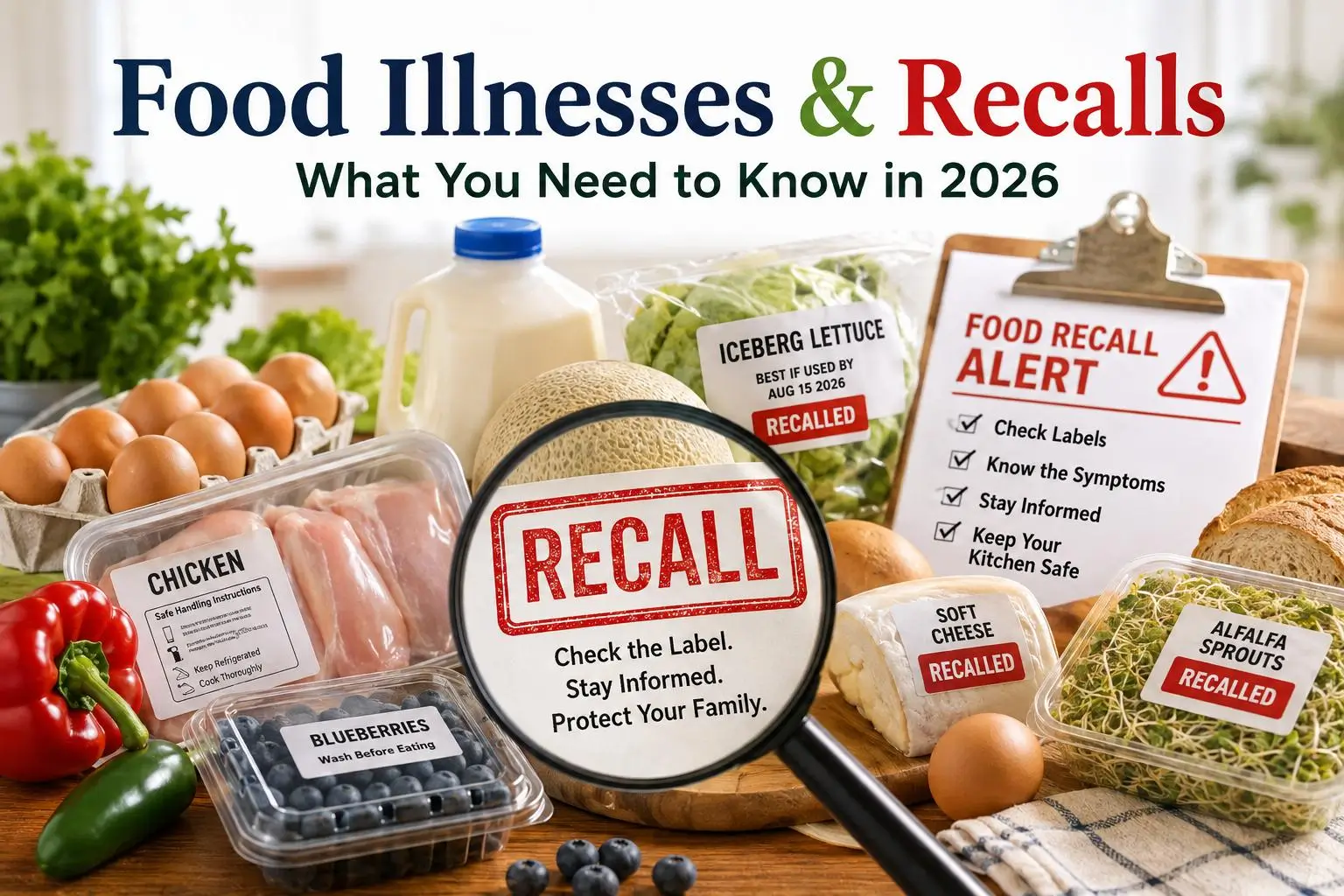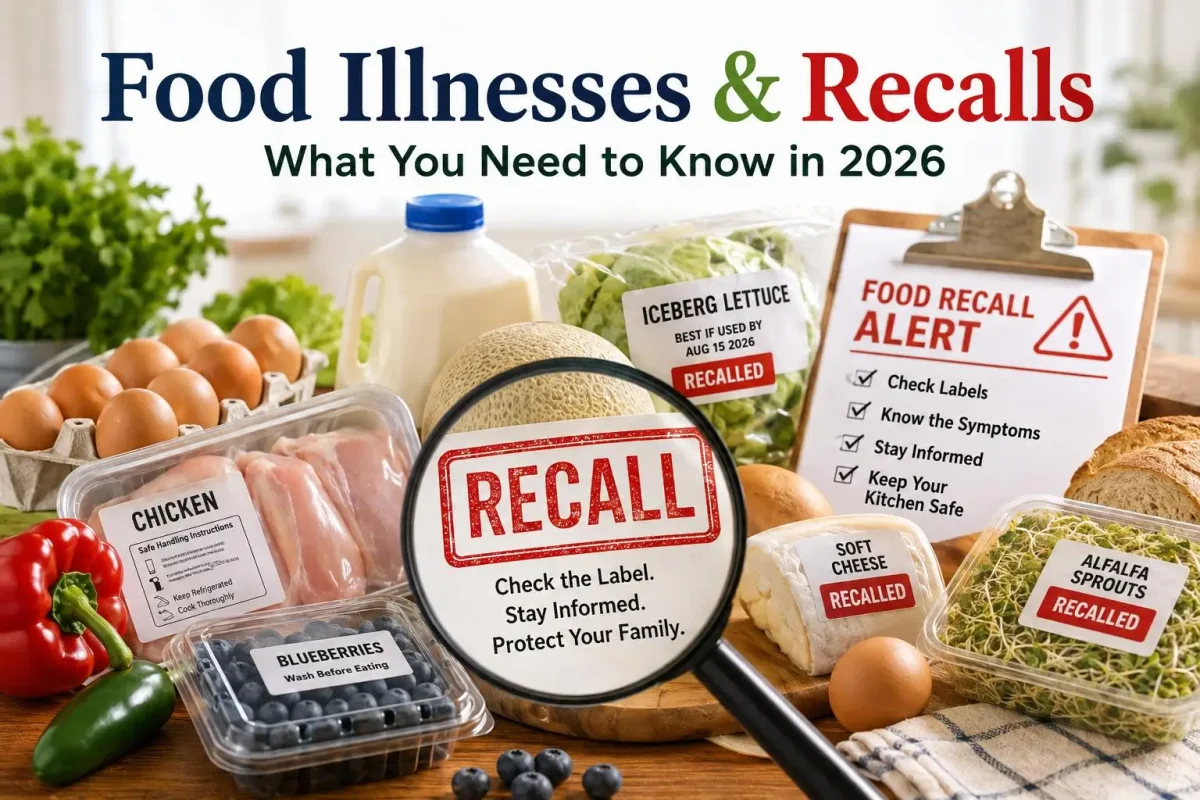
Foodborne Illnesses & Food Recalls: What You Need to Know in 2026
Food recalls seem to be everywhere lately. From fresh produce and eggs to cheese, frozen fruit, peppers, and packaged foods, consumers are seeing more food-safety alerts than ever. But what is actually making people sick? What do the different types of foodborne illnesses mean? And what should you do when you discover that something in your refrigerator or pantry has been recalled? This guide breaks down the major foodborne illnesses, the types of contamination that can lead to recalls, and some of the significant food-safety investigations and recalls reported in 2026.
**Important:** Food recalls change frequently. This article is intended as a food-safety resource, not a substitute for checking the latest official recall notices. Always verify a product against the current information from the FDA, USDA, CDC, or FoodSafety.gov.
Why Food Recalls Matter
Foodborne illness isn't just an upset stomach. The USDA estimates that foodborne illnesses cause about **48 million illnesses and 3,000 deaths each year in the United States**. ([Food Safety and Inspection Service][1])
Contamination can happen at almost any point in the food chain—from farms and processing facilities to transportation, grocery stores, restaurants, and even our own kitchens.
A recall may be issued because a food has been found to contain:
* Harmful bacteria
* Viruses
* Parasites
* Undeclared allergens
* Foreign materials such as glass or metal
* Dangerous levels of chemicals or toxins
* Other contaminants that could make the food unsafe
Sometimes a recall occurs after people become sick. Other times, testing discovers contamination before anyone reports an illness.
The Major Foodborne Illnesses
Salmonella
Salmonella is one of the best-known causes of food poisoning.
It can contaminate eggs, poultry, meat, produce, sprouts, spices, nuts, and other foods.
Symptoms can include:
- Diarrhea
- Fever
- Stomach cramps
- Nausea
- Vomiting
Most people recover, but Salmonella can cause serious illness, particularly in young children, older adults and people with weakened immune systems.
E. coli
Certain strains of E. coli, particularly Shiga toxin-producing E. coli (STEC), can cause severe illness.
Symptoms may include:
- Severe stomach cramps
- Diarrhea
- Vomiting
- Fever
- Bloody diarrhea
In some cases, an E. coli infection can lead to hemolytic uremic syndrome (HUS), a serious complication that can cause kidney failure.
Frozen blueberries are among the 2026 foods involved in an E. coli investigation. The CDC's current outbreak information also lists E. coli investigations among the active foodborne-illness investigations. ([CDC][2])
Listeria
Listeria monocytogenes can be particularly dangerous because it can cause invasive illness.
Foods associated with Listeria outbreaks have included:
- Deli meats
- Soft cheeses
- Ready-to-eat foods
- Dairy products
- Produce
Pregnant women, newborns, older adults, and people with weakened immune systems are at increased risk of serious complications.
In 2026, health officials investigated a multistate Listeria outbreak associated with soft cheese, with additional cheese products being recalled. ([CDC][3])
Cyclospora
Cyclospora is a parasite rather than a bacterium.
It can cause:
- Frequent watery diarrhea
- Stomach cramps
- Bloating
- Nausea
- Fatigue
- Weight loss
One of the major foodborne illness stories of summer 2026 involved Cyclospora associated with iceberg lettuce.
The CDC currently reports 10,930 illnesses, 454 hospitalizations, and 2 deaths in the multistate outbreak linked to iceberg lettuce from Taylor Farms de Mexico. ([CDC][4])
The recalled lettuce should not be eaten.
Campylobacter
Campylobacter is another common cause of bacterial food poisoning.
It is frequently associated with:
- Undercooked poultry
- Raw milk
- Contaminated water
- Cross-contamination
Symptoms can include diarrhea, fever, and abdominal cramps.
Norovirus
Norovirus is extremely contagious and is often associated with contaminated food, water or infected food handlers.
It commonly causes:
- Sudden vomiting
- Watery diarrhea
- Stomach cramps
- Nausea
Unlike many bacterial foodborne illnesses, norovirus can spread very easily from person to person.
Hepatitis A
Hepatitis A is a virus that can spread through contaminated food and water.
Food handlers who are infected can potentially contaminate food, which is one reason proper handwashing and food-handling practices are so important.
Botulism
Botulism is rare but potentially life-threatening.
It is caused by toxins produced by Clostridium botulinum bacteria.
Improperly canned foods are a classic concern, which is particularly important for people who do home canning.
Botulism can also be associated with other foods. The CDC's 2026 outbreak listings include an investigation involving powdered infant formula and infant botulism. ([CDC][2])
Some of the Major Food-Safety Problems in 2026
The current year has brought several major food-safety investigations.
Jalapeños and Salmonella
A multistate Salmonella outbreak has been linked to jalapeño peppers imported from Sinaloa, Mexico, and distributed by Coast Citrus Distributors.
The FDA says recalls involving the peppers and products containing them have followed. Consumers and food businesses have been advised not to eat, sell or serve affected products and to carefully clean and sanitize surfaces that recalled jalapeños contacted. ([U.S. Food and Drug Administration][5])
Iceberg Lettuce and Cyclospora
The large Cyclospora outbreak associated with iceberg lettuce resulted in a recall of lettuce sourced from central Mexico.
The CDC says the recalled lettuce was no longer expected to be available in stores or restaurants because the listed best-by dates had passed, but consumers should still check their refrigerators and freezers. ([CDC][4])
Eggs and Salmonella
A multistate Salmonella outbreak has also been associated with shell eggs.
According to the FDA, 98 people in 17 statesnhad been infected, with 26 hospitalizations and no deaths reported in the investigation update. ([U.S. Food and Drug Administration][6])
Frozen Blueberries and E. coli
Frozen blueberries have also been involved in a 2026 E. coli investigation and recall activity. The CDC lists frozen blueberries among its current foodborne outbreak investigations. ([CDC][2])
Soft Cheese and Listeria
Soft cheese has been associated with a 2026 multistate Listeria investigation. FDA guidance says consumers should not eat recalled cheese and should follow the individual recall instructions. ([U.S. Food and Drug Administration][7])
Alfalfa Sprouts
Another developing 2026 investigation involves alfalfa sprouts distributed by Everything Sprouts.
The FDA reported an outbreak involving both Salmonella and Shiga toxin-producing E. coli strains and said it had begun an onsite inspection and sampling investigation. ([U.S. Food and Drug Administration][8])
Recalls Aren't Always Because of Germs
A food can be recalled even when nobody has become sick.
For example, food can be recalled because of:
Undeclared Allergens. This is especially important for people with serious food allergies.
A product might accidentally contain:
- Milk
- Eggs
- Wheat
- Soy
- Peanuts
- Tree nuts
- Fish
- Shellfish
- Sesame
If the allergen isn't properly declared on the label, the product may be recalled.
Glass or Metal
Physical contamination can happen during manufacturing.
For example, the FDA's current recall database includes an August 18, 2026 recall of Outshine Fruit Bars because of possible glass contamination. ([U.S. Food and Drug Administration][9])
Manufacturing Problems
Sometimes recalls are caused by problems with processing, packaging, sanitation, refrigeration, or other manufacturing procedures.
That's why it's important not to assume that a recall means the food was intentionally or obviously “bad.”
What Should You Do When Food Is Recalled?
If you discover that you have recalled food at home:
1. Stop eating it. Don't taste it to see whether it seems okay.
2. Check the entire package. Compare the brand, product name, package size, lot number, UPC, and dates with the official recall notice.
3. Don't give it to someone else. Don't donate or give recalled food to friends, family, or a food pantry.
4. Dispose of it according to the recall instructions. Some recalls recommend returning the food to the store for a refund.
5. Clean the area. If contaminated food may have leaked or touched refrigerator shelves, countertops, cutting boards, or containers, wash and sanitize those surfaces.
6. Check other products. A contaminated ingredient can sometimes be used in multiple foods, resulting in several related recalls.
How to Stay Ahead of Food Recalls
You don't have to be afraid of your food to be food-safe. Instead, make checking recalls part of your normal household routine.
I recommend checking the official sites:
[FDA Recalls, Market Withdrawals & Safety Alerts](https://www.fda.gov/safety/recalls-market-withdrawals-safety-alerts?utm_source=chatgpt.com)
[USDA FSIS Recalls & Public Health Alerts](https://www.fsis.usda.gov/recalls?utm_source=chatgpt.com)
[CDC Current Foodborne Outbreaks](https://www.cdc.gov/foodborne-outbreaks/outbreaks/index.html?utm_source=chatgpt.com)
[FoodSafety.gov Recalls & Outbreaks](https://www.foodsafety.gov/recalls-and-outbreaks?utm_source=chatgpt.com)
These are much better sources for checking whether a specific product is currently recalled than relying on social media posts.
Keep Your Pantry and Refrigerator Safer
A few simple habits can reduce your risk of foodborne illness:
- Wash your hands properly before preparing food.
- Keep raw meat separate from ready-to-eat foods.
- Use separate cutting boards when appropriate.
- Cook foods to safe internal temperatures.
- Refrigerate perishable foods promptly.
- Don't eat foods that smell or look suspicious.
- Follow safe home-canning procedures.
- Keep your refrigerator at a safe temperature.
- Wash produce when appropriate.
- Pay attention to expiration, use-by, and best-by information.
- Check recall notices regularly.
And remember: washing your hands and keeping your kitchen clean won't make recalled food safe. If a product has been officially recalled because of contamination, don't try to “save” it.
Don't Panic—Stay Informed
Seeing one food recall after another can make it feel like nothing is safe anymore. That's not the message consumers should take away. The modern food system is enormous, and food travels through complicated supply chains before it reaches our kitchens. Improved laboratory testing and disease surveillance can also identify connections between illnesses that might have gone unnoticed years ago.
The important thing is to stay informed rather than frightened.
Food safety is about knowing what to look for, knowing where to check, and knowing what to do when something goes wrong.
Bookmark These Resources
For the most current information
Get the latest news, tips, and alerts from foodsafety.gov and find out what you need to know about safely handling and storing food to prevent food poisoning.