What Happened to Milk Safety? Concerns About FDA Cuts and What Consumers Should Know
If you buy milk at the grocery store, you probably don't spend much time thinking about how many inspections, tests, and safety checks happen before that gallon ever reaches your refrigerator.
I certainly didn't until I started hearing about changes at the FDA and cuts affecting milk safety programs.
So what actually happened, and should we be worried about the milk we're buying?
The FDA Did Suspend a Milk Testing Program
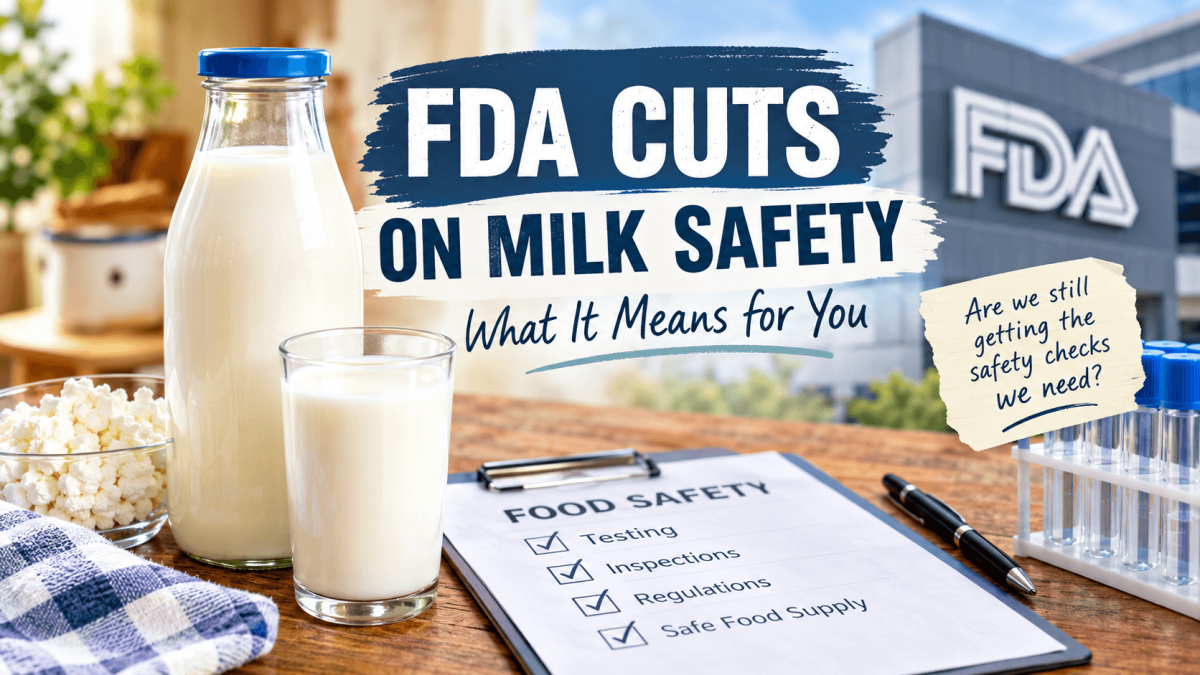
In April 2025, the FDA suspended its proficiency-testing program for Grade “A” milk and milk products. The suspension was reported as part of broader workforce and capacity reductions within the agency. (Reuters)
That sounds alarming and understandably so.
But there is an important distinction.
The FDA did not simply stop all milk safety testing.
The program that was suspended was designed to check the performance of laboratories and help make sure they were accurately testing dairy products. Other milk safety testing and regulatory programs continued through federal, state, and industry systems. (FoodHandler®)
Still, I think it's fair to ask an important question:
When we reduce the people and resources responsible for checking our food supply, are we creating unnecessary risks?
Why Does Milk Safety Matter?
Milk can look perfectly clean and normal while still containing harmful microorganisms.
Raw, unpasteurized milk can potentially contain bacteria such as:
- Salmonella
- E. coli
- Listeria
- Campylobacter
- Brucella
The FDA and CDC continue to warn about the potential health risks associated with consuming raw milk. (U.S. Food and Drug Administration)
That's one reason pasteurization became such an important part of the modern milk supply.
Pasteurization Is Still an Important Safety Step
Pasteurization uses controlled heat to destroy harmful microorganisms.
The FDA says pasteurization effectively kills pathogens that can be present in raw milk without significantly affecting its nutritional quality. (U.S. Food and Drug Administration)
The federal Grade “A” Pasteurized Milk Ordinance, commonly called the PMO, is one of the major pieces of the system used to establish safety standards for Grade “A” milk and dairy products. (U.S. Food and Drug Administration)
So this isn't simply a story about whether milk is “safe” or “unsafe.”
It's about the entire system of inspections, laboratory testing, pasteurization, regulation, and oversight that is supposed to keep our food supply safe.
What About Bird Flu and Milk?
Milk safety has become an even bigger conversation because of H5N1 avian influenza in dairy cattle.
The FDA has reported that pasteurization is effective at inactivating the virus. The agency also reported testing hundreds of pasteurized dairy products and finding no viable H5N1 virus in those samples. (U.S. Food and Drug Administration)
That is reassuring.
But it also demonstrates why monitoring the food supply matters.
We need laboratories and regulators to have the resources necessary to identify problems quickly when they occur.
Should You Stop Buying Milk?
I don't think the answer is to panic.
The suspension of the FDA proficiency-testing program does not mean that every carton of milk sitting in your refrigerator is suddenly unsafe.
Milk safety involves multiple layers of oversight, including state programs, dairy processors, laboratories, pasteurization requirements, and federal regulations.
However, I do think consumers should pay attention when food-safety programs lose funding, personnel, or testing capacity.
Food safety works best when problems are prevented or caught early rather than discovered after people become sick.
What About Raw Milk?
This is where the conversation gets especially important.
There has been growing interest in raw milk because some people prefer foods that are less processed. Others believe raw milk has nutritional or health advantages.
But raw milk isn't simply pasteurized milk without the heat.
It can contain disease-causing microorganisms, and contamination isn't necessarily something you can see, smell, or taste. The FDA and CDC recommend against consuming raw milk because of these risks. (U.S. Food and Drug Administration)
If you choose to buy raw milk, it's especially important to understand your state's laws and the risks involved.
A Reason to Pay Attention—Not Panic
For me, the bigger issue isn't whether we should panic about the gallon of milk in the refrigerator.
It's whether we're paying enough attention to the systems that protect our food supply.
When an agency responsible for food safety loses employees, laboratory capacity, or testing programs, consumers have every right to ask questions.
We should know:
Who is testing our food?
How often is it being tested?
Are laboratories properly equipped and staffed?
Are regulators able to respond quickly when something goes wrong?
Those aren't political questions to me.
They're food-safety questions.
And whether you buy conventional milk, organic milk, locally produced milk, or raw milk, everyone has a stake in making sure the food on our tables is as safe as possible.
The Bottom Line
The FDA's milk testing changes deserve attention, but the facts matter.
The agency suspended a milk proficiency-testing program in 2025 amid workforce and capacity reductions. That did not mean that all milk safety testing stopped. (Reuters)
Pasteurization remains an important food-safety measure, and consumers should continue to handle and refrigerate milk properly.
But this situation is also a reminder that food safety doesn't happen by accident.
It takes people, laboratories, inspections, testing, regulations, and oversight.
And those systems are worth paying attention to.
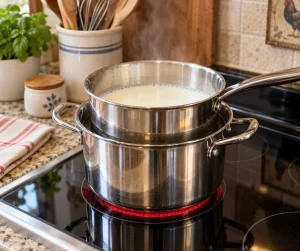
If you are concerned about the safety of your milk, it is super easy to pasteurize it yourself at home. Here are some quick and simple instructions
The simplest method is low-temperature, long-time (LTLT) pasteurization.
🥛 Easy Home Pasteurization
You’ll need:
Fresh milk
Large stainless-steel pot
Food thermometer
Clean containers with lids
Ice or very cold water
Instructions:
1. Pour the milk into a clean pot.
2. Heat slowly, stirring frequently so the milk doesn't scorch.
3. Bring the milk to 145°F (63°C).
4. Keep it at 145°F for 30 minutes. Stir occasionally and monitor the temperature so it doesn't drop below 145°F.
5. Cool the milk quickly. Put the pot in an ice-water bath and stir until the milk reaches 40°F (4°C) or colder.
6. Pour into clean, covered containers.
7. Refrigerate immediately and keep at 40°F or below.
⚠️ Important
Use a reliable food thermometer—temperature and time are critical.
Keep everything that touches the milk very clean.
Pasteurization reduces harmful bacteria but doesn't make milk shelf-stable. Keep it refrigerated.
If you're starting with raw milk, keep it refrigerated until you're ready to pasteurize it.
Faster method: You can heat milk to 161°F (72°C) for at least 15 seconds, then cool it rapidly. This is the common high-temperature, short-time method.