The Humble Mason Jar: A Little History Behind a Kitchen Staple
If you walk into my kitchen or probably the kitchen of anyone who cans, preserves, gardens, or tries to be a little more self-sufficient you’re going to find Mason jars.
Probably a lot of them.
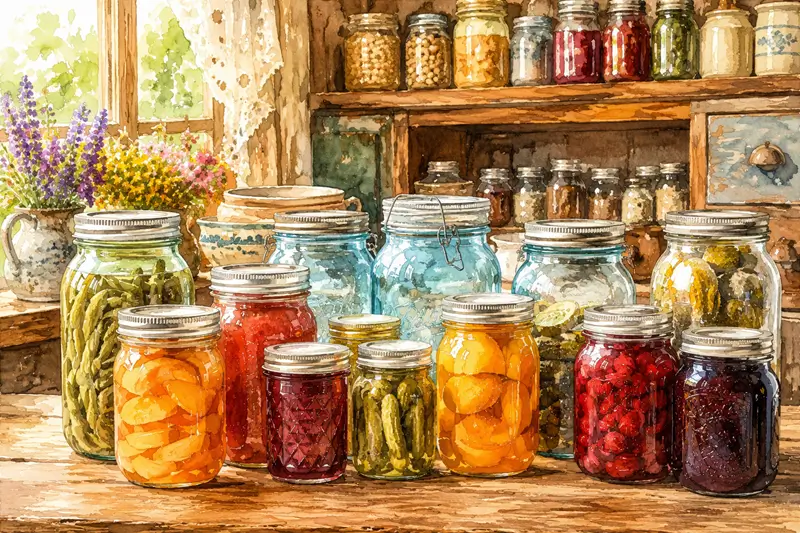
Some are filled with home-canned food. Some hold dried beans, herbs, or dehydrated vegetables. And there are always a few empty ones waiting for the next project.
But have you ever wondered where Mason jars actually came from?
Turns out, that simple glass jar sitting on your pantry shelf has been around for more than 165 years.
Before the Mason Jar
Long before refrigerators and freezers, people had to get creative if they wanted food to last.
Food was dried, salted, smoked, fermented, pickled, or stored in whatever containers were available. Glass jars were eventually used for preserving food, but there was a problem: getting a reliable airtight seal wasn't always easy.
That mattered.
If you spent all day putting food away for winter, the last thing you wanted was to discover later that your jars hadn't sealed properly and the food had spoiled.
Then along came John Landis Mason.
The Mason Jar Is Born
In 1858, American tinsmith John Landis Mason patented an improvement that would change home food preservation: a glass jar with threads molded into the neck so a screw-on lid could be attached.
It sounds incredibly simple today.
At the time, it was a big deal.
The threaded neck made jars easier to close securely and helped create a more practical system for preserving food at home.
The jars became known by Mason's name, and the term Mason jar eventually became a common name for this style of home-canning jar.
Interestingly, Mason himself didn't become incredibly wealthy from the invention. His patent eventually expired, and other manufacturers began producing jars based on the idea.
And that's where some other familiar names enter the story.
Along Came Ball and Kerr
If you've ever done any home canning, you've probably seen the names Ball and Kerr.
The Ball brothers began producing glass canning jars in the late 1800s, and Ball jars became incredibly popular in American households.
Kerr came along later and became another major name in home canning. Alexander H. Kerr's company helped popularize improvements in canning lids, including systems that eventually led toward the familiar two-piece lid used by home canners today—a flat metal lid combined with a screw band.
That basic idea is still sitting in kitchens all across America.
Pretty impressive for something that seems so ordinary.
Mason Jars Became Part of Everyday Life
For generations, Mason jars weren't decorations.
They were tools.
Families grew gardens and preserved the harvest because they needed that food to carry them through the months when fresh produce wasn't readily available.
Tomatoes became sauce.
Cucumbers became pickles.
Peaches, pears, berries, jams, jellies, relishes, and countless other foods went into jars.
Those jars represented work, planning, and security.
A pantry filled with home-canned food meant there was something to eat later.
During difficult economic times and wartime shortages, home gardening and food preservation became even more important. Canning allowed families to take advantage of seasonal abundance instead of letting perfectly good food go to waste.
And really, that idea hasn't changed much.
From Pantry Staple to Pinterest Star
Somewhere along the way, Mason jars became cool again.
Suddenly they weren't just for Grandma's green beans.
People started using them as drinking glasses, flower vases, candle holders, soap dispensers, craft projects, wedding decorations, overnight-oats containers, and just about anything else you can imagine.
I'm pretty sure someone, somewhere, has figured out how to build furniture out of them.
But while Mason jars have become trendy, their original purpose is still one of their best uses: preserving and storing food.
Why I Still Love Mason Jars
There's something satisfying about seeing rows of jars filled with food you've put up yourself.
Maybe it's homemade jam.
Maybe it's tomatoes from the garden.
Maybe it's dried herbs, dehydrated vegetables, beans, rice, or other pantry staples.
Each jar represents something you did for yourself.
That's one reason Mason jars fit so perfectly into a self-sufficient lifestyle. They're reusable, practical, relatively inexpensive, and incredibly versatile.
And unlike a lot of modern kitchen gadgets, they don't need electricity, an app, Wi-Fi, or a software update.
It's a glass jar.
Sometimes simple really is better.
A Little Piece of History on Your Shelf
The next time you pull a Mason jar out of the cupboard, take another look at it.
What seems like an ordinary glass container is actually part of a food-preservation tradition stretching back more than a century and a half.
From John Landis Mason's 1858 patent to generations of families filling pantries with food from their gardens, the Mason jar has earned its place in the American kitchen.
Styles have changed.
Kitchens have changed.
The way we buy and prepare food has definitely changed.
But that simple glass jar keeps hanging around.
And if you're working toward a more self-sufficient home, I'd say there's still plenty of room on the shelf for a few more.
Or twenty.
Because somehow you can never have enough Mason jars.