New Peanut Allergy Treatment Being Tested: Could a Tiny Skin Stamp Change the Future of Food Allergies?
A new development in peanut allergy research is giving hope to families who live with the constant worry of accidental peanut exposure. Researchers are testing an innovative treatment that uses a tiny microneedle stamp to deliver peanut protein through the skin rather than having patients eat peanuts.
Peanut allergies can be frightening and potentially life-threatening. Even a very small amount of peanut protein can trigger a serious allergic reaction in some people. For families dealing with severe food allergies, everyday activities such as eating at restaurants, attending school events, and traveling can require careful planning.
Now, researchers are exploring a different approach that could eventually help the immune system become more tolerant of peanuts.
A New Approach: The Peanut Allergy Microneedle Stamp
Children’s Healthcare of Atlanta and Emory University are leading a first-in-human Phase 1 clinical trial of an experimental device developed by Moonlight Therapeutics.
Instead of giving patients peanut protein orally, the device delivers tiny, controlled amounts through the skin.
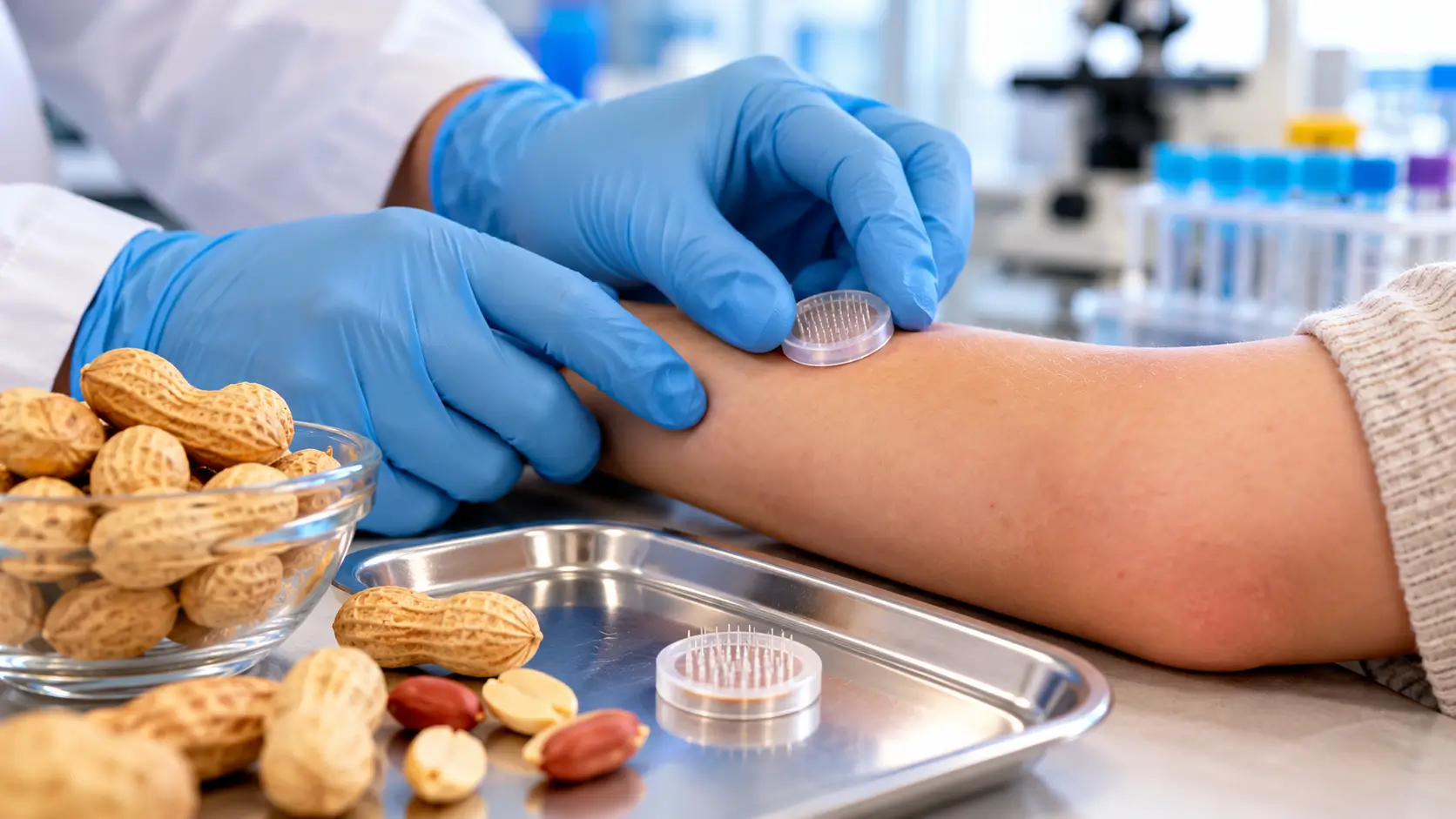
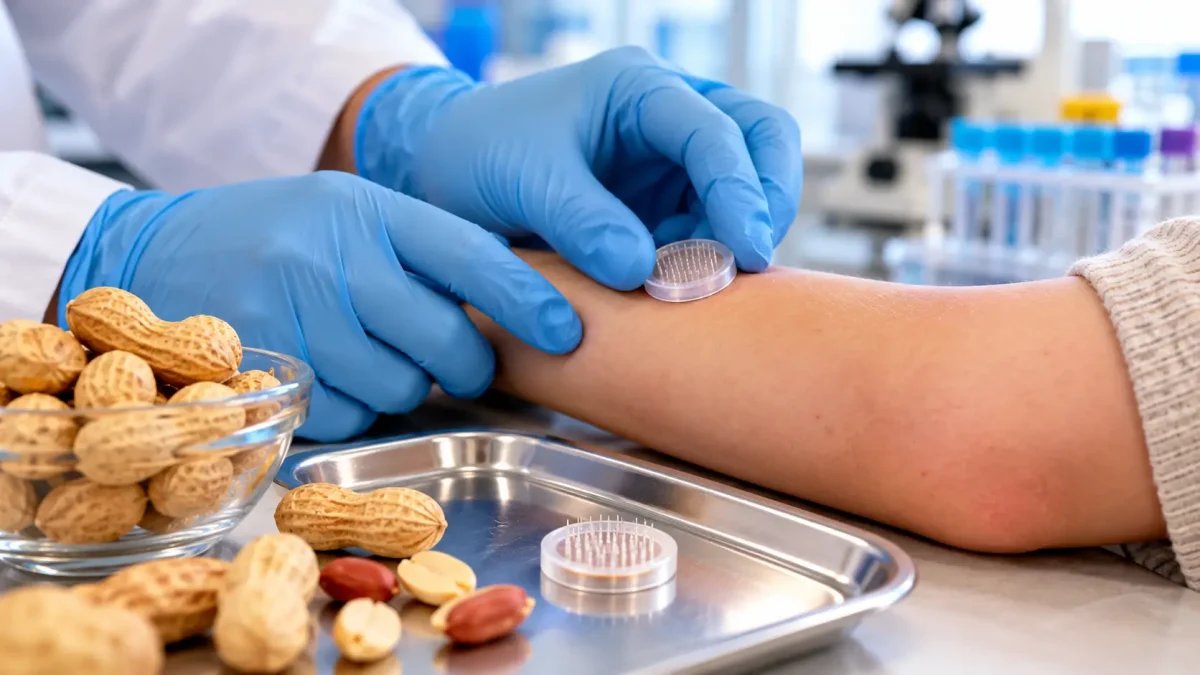
The device is approximately the size of a nickel and contains very small microneedles coated with peanut protein. It is placed against the skin of the forearm for approximately three minutes.
The goal is to introduce carefully measured amounts of peanut protein to immune cells in the skin and potentially teach the immune system to respond differently to peanuts.
How Does the Testing Work?
The initial clinical trial is designed to evaluate safety and tolerability.
Researchers begin with an extremely small dose of approximately one microgram of peanut protein and gradually increase the amount as participants tolerate treatment.
Participants receive an active microneedle stamp on one forearm and a placebo stamp on the other. Initially, treatments are administered under medical supervision once a week.
The research team will monitor participants for allergic reactions and other possible side effects.
The first group includes adults and young adults. If safety reviews are successful, researchers plan to expand testing to adolescents and eventually younger children, potentially including children as young as four.
The study involves multiple research locations, including Children’s Healthcare of Atlanta, Emory University, the University of North Carolina, the University of Arkansas, and the University of Michigan.
Is This a Peanut Allergy Vaccine?
Although this experimental treatment is sometimes compared to a vaccine, it is important to understand that it is not currently an approved peanut allergy vaccine.
The microneedle treatment is a form of experimental immunotherapy. Its purpose is to expose the immune system to controlled amounts of peanut protein in hopes of developing greater tolerance.
This is different from traditional vaccination, and researchers still need to determine whether the treatment can actually reduce allergic reactions.
The current Phase 1 trial is primarily about determining whether the approach is safe enough to continue studying. It is too early to know whether it will become an effective treatment.
Why Is This Research Important?
For someone with a severe peanut allergy, accidental exposure can lead to anaphylaxis, a potentially life-threatening reaction.
Current allergy management often involves strict avoidance of peanuts, careful food-label reading, and carrying emergency medication such as an epinephrine auto-injector.
Some existing treatments can help certain patients tolerate small amounts of peanut protein, but they require medical supervision and are not suitable for everyone.
A treatment that could eventually help the immune system tolerate accidental exposure without requiring patients to eat peanut products during treatment would represent an interesting new direction in allergy research.
The microneedle approach could also offer a more convenient way to administer immunotherapy if future studies demonstrate that it is safe and effective.
When Will This Treatment Be Available?
That is the big question, but there is no confirmed release date.
The study is still in its earliest human-testing stage. Phase 1 trials focus primarily on safety, tolerability, and determining appropriate doses.
Researchers will need additional studies to establish whether the treatment works, how long any protection lasts, and whether it is appropriate for children and adults with different levels of peanut sensitivity.
It could be several years before this technology is ready for widespread use, assuming future trials are successful.
The Bottom Line
Peanut allergy research continues to move in new directions, and this tiny microneedle stamp is an interesting development.
While it is not a cure or an approved vaccine, the idea of using controlled skin exposure to help retrain the immune system could eventually provide another option for people living with food allergies.
For now, anyone with a peanut allergy should continue following their allergist’s recommendations and should never attempt peanut exposure or allergy desensitization at home.
As research continues, this is one development worth watching.
*Important accuracy note: The treatment is still experimental. The current study is focused on safety and dosing, not proving that it prevents allergic reactions. Researchers also say home use is a possible future goal, not something currently permitted under the trial protocol.*