Gluten-Free Flours Explained: What Each Flour Does and When to Use It
If you’ve ever stood in the baking aisle staring at bags of almond flour, rice flour, tapioca starch, sorghum flour, and coconut flour wondering what in the world you’re supposed to do with all of them, you’re not alone.
When I first started eating gluten-free, I quickly discovered something important:
There really isn’t one gluten-free flour that does everything wheat flour does.
That’s why so many gluten-free recipes use a combination of flours and starches. One flour might provide structure, another adds softness, and a starch can help make your baked goods lighter.
Once you understand what each flour actually does, gluten-free baking becomes a whole lot less mysterious.
So, let’s take a look at some of the most useful gluten-free flours and starches and where they work best.
First: Flour and Starch Aren’t Quite the Same Thing
Before we start filling the pantry with bags of flour, there’s an important distinction.
Gluten-free flours generally provide flavor, structure, protein, fiber, or substance.
Starches tend to make baked goods lighter, softer, and less dense.
That’s one reason a good gluten-free flour blend often contains both.
Think of it as teamwork. The heavier flours provide the backbone while the starches help keep your biscuits from becoming hockey pucks.
And nobody wants a hockey puck for breakfast.
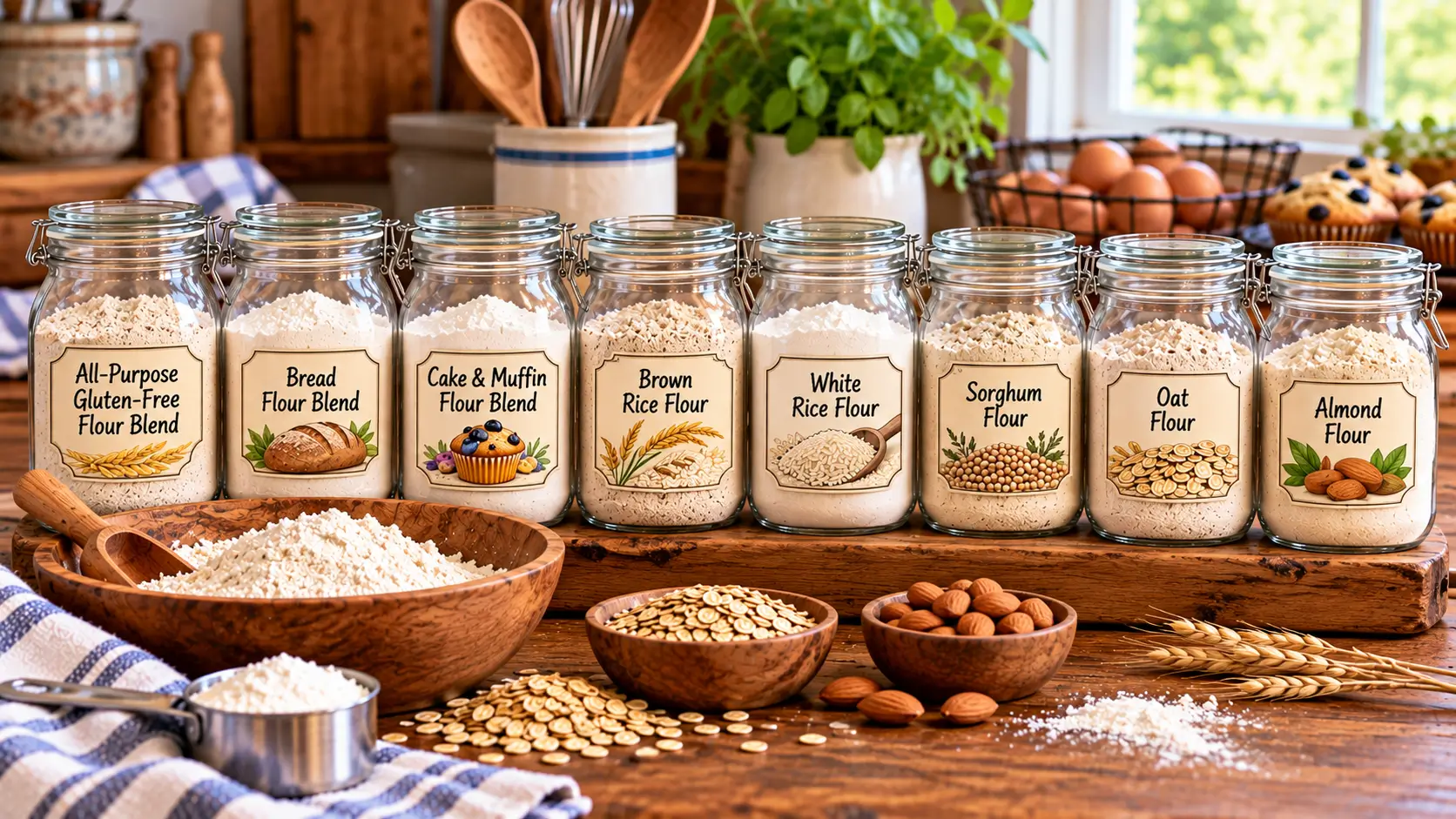
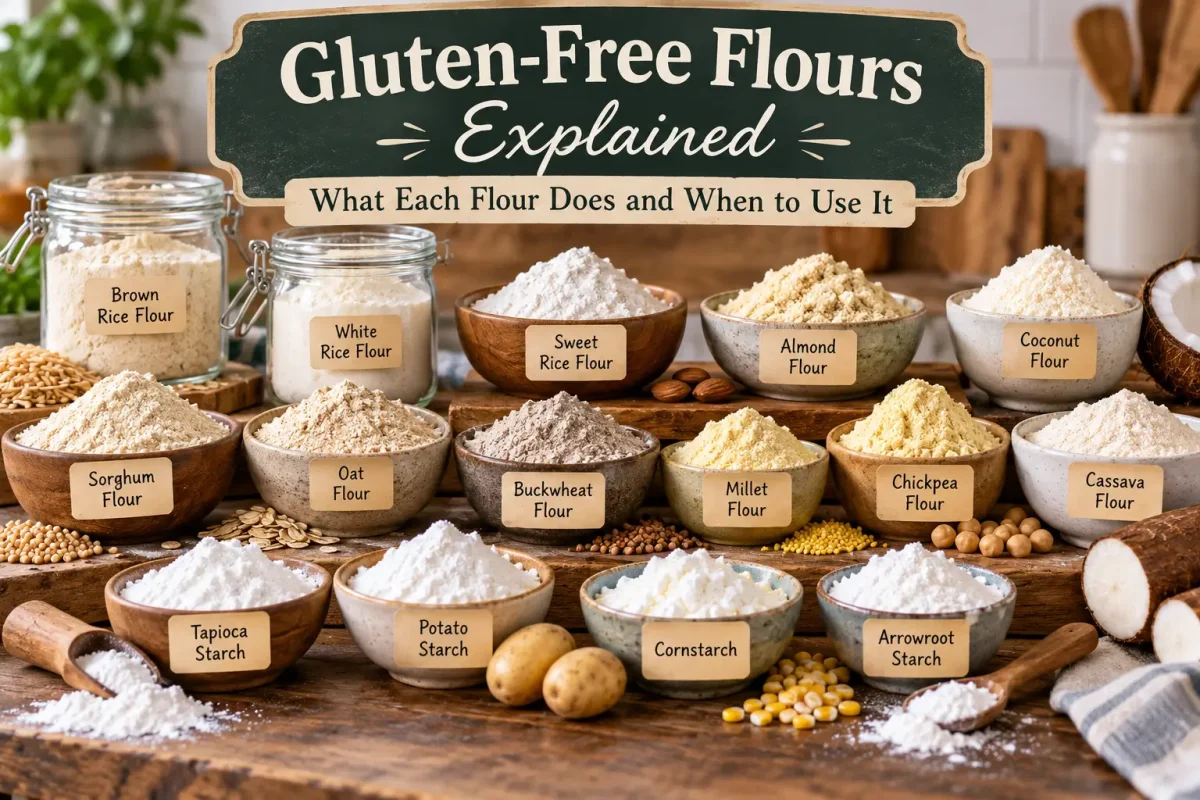
Brown Rice Flour
Brown rice flour is made from whole-grain brown rice and is one of the most versatile gluten-free flours.
It has a mild, slightly nutty flavor and works well in flour blends because it doesn’t overpower the other ingredients.
Best for:
- Bread
- Muffins
- Pancakes
- Cookies
- Quick breads
- All-purpose gluten-free flour blends
Because it contains the whole grain, brown rice flour also provides more fiber and nutrients than white rice flour.
It can sometimes produce a slightly gritty texture, so I usually prefer it as part of a flour blend rather than using it alone.
White Rice Flour
White rice flour is another gluten-free pantry staple.
It’s made from finely ground white rice and has a fairly neutral flavor, making it useful in all kinds of recipes.
Best for:
- Cakes
- Cookies
- Muffins
- Pancakes
- Breading
- Flour blends
White rice flour is generally lighter than brown rice flour, but it can still become gritty or dry if too much is used.
Combining it with starches such as tapioca or potato starch usually gives better results.
Sweet Rice Flour
Despite the name, sweet rice flour isn’t actually sweet.
It’s made from sticky or glutinous rice—and yes, despite that confusing name, glutinous rice does not contain gluten.
Sweet rice flour has excellent binding and thickening properties.
Best for:
- Sauces
- Gravies
- Roux
- Doughs
- Pastries
- Thickening soups
- Adding elasticity to flour blends
It can help create the chewy texture that’s sometimes missing in gluten-free foods.
Almond Flour
Almond flour is made from finely ground blanched almonds.
It contains protein and fat, which can make baked goods wonderfully moist and tender.
Best for:
- Cookies
- Cakes
- Muffins
- Quick breads
- Crackers
- Low-carb recipes
Because almond flour behaves very differently from grain-based flour, you generally can’t replace wheat flour cup-for-cup with almond flour and expect the same result.
Recipes specifically designed for almond flour usually work best.
And because almonds contain natural oils, almond flour should be stored carefully. I like keeping it in the refrigerator or freezer if I’m not going to use it quickly.
Coconut Flour
Coconut flour is probably one of the most misunderstood gluten-free flours.
It is extremely absorbent.
A little goes a long way.
If you replace a cup of regular flour with a cup of coconut flour, you may end up with something better suited for building a small garden wall than eating.
Coconut flour recipes usually require considerably more liquid and often additional eggs.
Best for:
- Muffins
- Pancakes
- Cakes
- Cookies
- Grain-free baking
I recommend using recipes specifically developed for coconut flour rather than experimenting with direct substitutions.
Sorghum Flour
Sorghum flour is one of my favorite choices for gluten-free flour blends because it has a mild flavor and works beautifully in baked goods.
It also provides protein and fiber.
Best for:
- Bread
- Muffins
- Pancakes
- Cookies
- Cakes
- Pizza dough
- Flour blends
Sorghum pairs particularly well with rice flour and starches.
If you’re trying to create a gluten-free flour blend that doesn’t have a strong or unusual flavor, sorghum is definitely worth keeping in the pantry.
Oat Flour
Oat flour has a slightly sweet, comforting flavor and creates wonderfully soft baked goods.
You can buy oat flour or make your own by grinding oats in a high-powered blender or food processor.
But there’s one important thing to remember:
If you need to avoid gluten, use oats specifically labeled gluten-free.
Regular oats can be contaminated with wheat, barley, or rye during growing and processing.
Best for:
- Muffins
- Pancakes
- Cookies
- Quick breads
- Breakfast bars
Oat flour is especially nice in recipes where you want a soft, slightly hearty texture.
Buckwheat Flour
Here’s another confusing name.
Despite having “wheat” in the name, buckwheat isn’t wheat at all and is naturally gluten-free.
It has a distinctive earthy, nutty flavor.
Best for:
- Pancakes
- Waffles
- Rustic breads
- Crepes
- Muffins
Because the flavor can be fairly strong, I often prefer combining buckwheat flour with milder gluten-free flours.
Millet Flour
Millet flour has a mild, slightly sweet flavor and works nicely in gluten-free baking.
Best for:
- Bread
- Muffins
- Pancakes
- Flatbreads
- Cookies
- Flour blends
It pairs well with sorghum, rice flour, and starches.
Like many gluten-free flours, millet usually works better as part of a blend rather than being used entirely on its own.
Chickpea Flour
Chickpea flour—sometimes called garbanzo bean flour—is made from ground chickpeas.
It’s high in protein and has excellent binding properties.
It also has a noticeable bean-like flavor, especially before it’s cooked.
Best for:
- Savory breads
- Flatbreads
- Pizza crust
- Crackers
- Breading
- Savory pancakes
I usually save chickpea flour for savory recipes rather than delicate cakes or cookies.
Cassava Flour
Cassava flour is made from the whole cassava root.
It has become popular because its texture can work surprisingly well in recipes traditionally made with wheat flour.
Best for:
- Tortillas
- Flatbreads
- Pancakes
- Cookies
- Grain-free baking
Cassava flour is often easier to work with than coconut flour, but it still isn’t a guaranteed one-for-one replacement in every recipe.
Tapioca Starch
Tapioca starch—also sold as tapioca flour—is made from cassava root, but it isn’t the same thing as cassava flour.
Tapioca starch is light and powdery.
It helps give gluten-free baked goods elasticity and chew.
Best for:
- Bread
- Pizza crust
- Tortillas
- Cookies
- Flour blends
- Thickening sauces
It’s particularly helpful when you’re trying to recreate that slightly stretchy texture gluten normally provides.
Potato Starch
Potato starch is another useful ingredient in gluten-free flour blends.
And don’t confuse it with potato flour. They are different ingredients.
Potato starch is light and helps create soft, tender baked goods.
Best for:
- Cakes
- Muffins
- Bread
- Cookies
- Flour blends
- Thickening sauces
It’s especially useful when a gluten-free recipe needs a little more lightness.
Cornstarch
Most of us already have cornstarch somewhere in the pantry.
It’s useful for much more than thickening gravy.
Cornstarch can help create a tender texture in gluten-free baking.
Best for:
- Cakes
- Cookies
- Biscuits
- Sauces
- Gravies
- Puddings
- Flour blends
Just make sure your particular product meets your gluten-free requirements.
Arrowroot Starch
Arrowroot is another light starch that works well in gluten-free cooking and baking.
Best for:
- Sauces
- Gravies
- Cookies
- Cakes
- Flour blends
It can sometimes be substituted for tapioca or cornstarch, depending on the recipe.
So Which Gluten-Free Flour Should You Use?
Here’s the frustrating answer:
It depends on what you’re making.
But that’s also the secret to better gluten-free baking.
Instead of searching for one magical flour that replaces wheat flour perfectly, think about what you want your recipe to do.
Need more structure?
Try brown rice flour or sorghum flour.
Want something lighter?
Add a starch such as potato or tapioca.
Need moisture and richness?
Almond flour might be a good choice.
Need chew or elasticity?
Tapioca starch or sweet rice flour can help.
Once you start thinking about the job each ingredient is doing, creating and adjusting gluten-free recipes becomes much easier.
Why Gluten-Free Flour Blends Work So Well
This is exactly why homemade gluten-free flour blends are so useful.
Instead of asking one flour to do everything, you’re combining several ingredients that each bring something different to the recipe.
A simple blend might contain:
A base flour — such as brown rice, white rice, or sorghum flour
A lighter flour or second grain — such as millet or oat flour
A starch — such as tapioca, potato, or arrowroot
Depending on what you’re baking, you may also need a binder such as xanthan gum, guar gum, or psyllium husk.
The goal isn’t to perfectly imitate wheat flour.
The goal is to create the texture, structure, moisture, and flavor your particular recipe needs.
One More Tip: Don’t Change Everything at Once
Experimenting is part of gluten-free baking, but here’s something I’ve learned:
Change one thing at a time.
If you change the flour, starch, binder, liquid, and baking temperature all at once and the recipe turns out badly, you’ll have absolutely no idea what went wrong.
Change one ingredient.
Write down what you did.
Bake it.
Then decide whether the change made things better or worse.
Yes, it takes a little patience.
But eventually you’ll start recognizing what different gluten-free flours do—and that’s when gluten-free baking becomes a whole lot more fun.
Final Thoughts
Gluten-free baking doesn’t have to be complicated.
You don’t need twenty different bags of flour stuffed into your pantry, either.
Start with a few versatile choices such as brown rice flour, sorghum flour, and tapioca or potato starch. As you experiment with different recipes, you can add other flours that suit the foods you make most often.
Once you understand why each flour is there, those bags of mysterious white powder in the pantry suddenly start making sense.
And if a baking experiment occasionally comes out looking a little questionable?
Well…
If it tastes good, I’m still eating it.