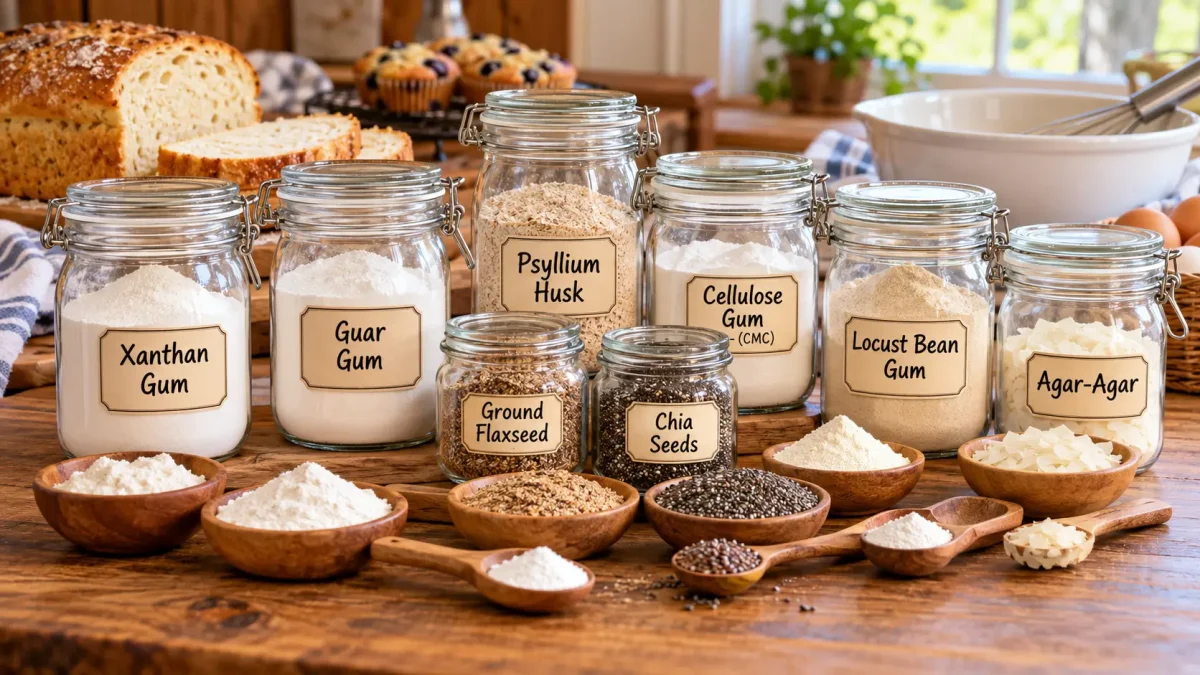
Gluten-Free Baking Gums: What They Are and Why You Need Them
If you’ve ever looked at a gluten-free recipe and wondered, “Why on earth am I putting gum in my bread?” you’re not alone.
When I first started gluten-free baking, ingredients like xanthan gum sounded more like something from a science experiment than something I wanted in my kitchen. But there’s a good reason these ingredients show up in so many gluten-free recipes.
Gluten-free flours are missing something very important: gluten.
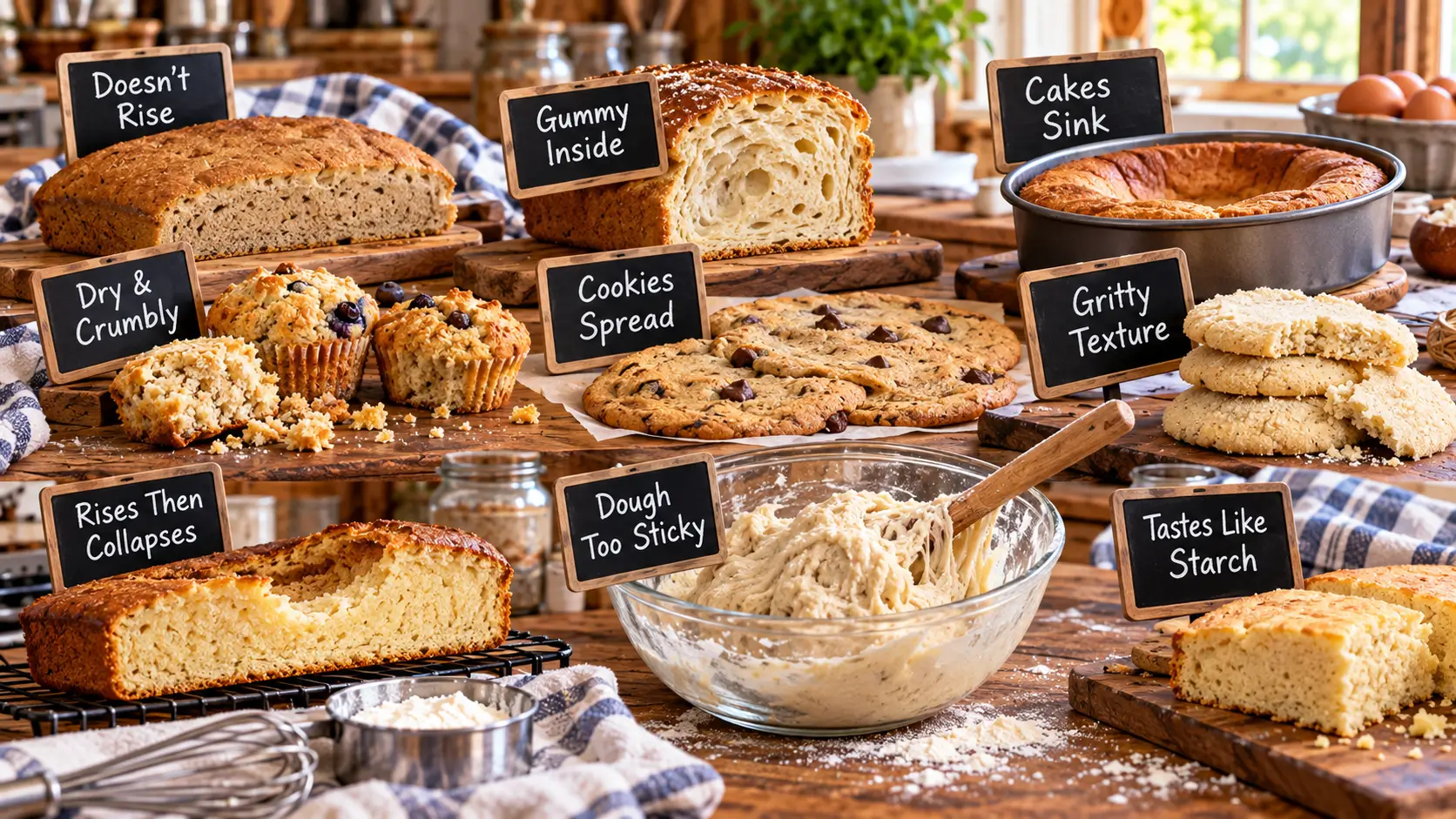
Gluten gives regular dough its stretch, helps hold everything together, traps the gases produced by yeast or baking powder, and gives breads and baked goods their familiar texture. Take gluten away, and your beautiful loaf of bread can quickly become a pile of crumbs.
That’s where gums and other binders come in.
Why Do We Use Gums in Gluten-Free Baking?
Think of gluten as the framework holding a baked good together. Wheat flour naturally develops that framework when mixed with liquid.
Rice flour, almond flour, tapioca starch, potato starch, sorghum flour, and other gluten-free ingredients don’t behave the same way.
A small amount of gum can help:
- Hold ingredients together
- Improve elasticity
- Keep baked goods from crumbling
- Trap air and gases so breads rise better
- Retain moisture
- Improve the texture of dough and batter
- Help baked goods stay soft longer
But here’s the important part: more isn’t better.
Too much gum can turn your bread into something strangely stretchy, gummy, or even slimy. We’re trying to make bread here—not a kitchen sponge.
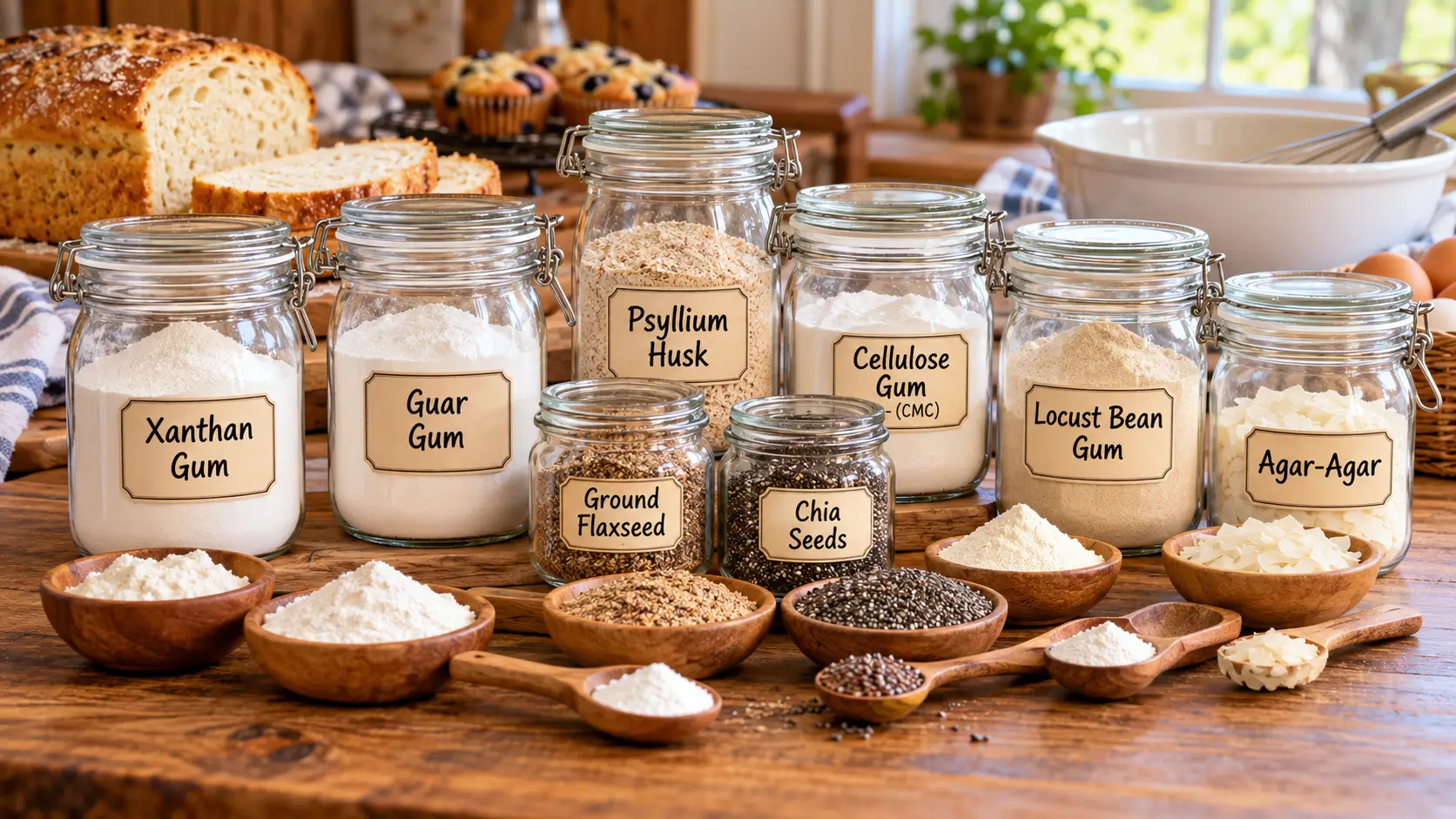
Xanthan Gum
Xanthan gum is probably the best-known binder in gluten-free baking.
It is produced through fermentation and is used in very small quantities. It helps thicken liquids and gives gluten-free dough some of the elasticity and structure normally provided by gluten.
Xanthan gum works especially well in:
Breads, pizza crusts, muffins, cakes, cookies, pancakes, and other baked goods.
You don’t need much. Depending on the recipe, you may only use a fraction of a teaspoon or a teaspoon or two for an entire batch.
Some commercial gluten-free flour blends already contain xanthan gum, so always check the ingredient label before adding more.
Guar Gum
Guar gum is another common gluten-free binder. It comes from guar beans and works as both a thickener and stabilizer.
Like xanthan gum, guar gum helps ingredients stick together and can improve the texture of gluten-free baked goods.
It can work particularly well in:
Cakes, muffins, cookies, quick breads, and other softer baked goods.
Some bakers prefer guar gum because it is plant-derived and can be less expensive than xanthan gum.
However, guar gum and xanthan gum don’t behave exactly the same way. You may be able to substitute one for the other in some recipes, but you might need to experiment with the amount.
Psyllium Husk
Technically, psyllium husk isn’t a gum, but you’ll see it used frequently in modern gluten-free baking—especially bread.
And for good reason.
Psyllium husk absorbs a tremendous amount of water and forms a gel. That gel helps create a flexible dough that can actually be shaped rather than poured into a pan like cake batter.
It is especially useful for:
Artisan-style breads, sandwich bread, rolls, pizza dough, and other yeast doughs.
Psyllium can help gluten-free bread develop a softer interior, better structure, and a crust that feels much more like traditional bread.
Whole psyllium husk and psyllium husk powder can behave differently, so use the form specified in the recipe rather than automatically swapping one for the other.
Cellulose Gum
You may also see cellulose gum, sometimes listed as carboxymethyl cellulose or CMC, in commercially prepared gluten-free foods.
It is a thickener and stabilizer made from cellulose. Manufacturers use it to improve texture, retain moisture, and help prevent ingredients from separating.
It’s less common in everyday home baking than xanthan gum or psyllium husk, but you’re likely to spot it if you start reading the labels on packaged gluten-free foods.
Locust Bean Gum
Locust bean gum, also called carob bean gum, comes from the seeds of the carob tree.
It is used as a thickener and stabilizer and is commonly found in foods such as ice cream, sauces, dairy products, and some gluten-free products.
It’s not usually the first binder I’d reach for when making a loaf of gluten-free bread at home, but it’s another ingredient you may encounter when reading gluten-free labels.
Agar-Agar
Agar-agar comes from red algae and forms a fairly firm gel when dissolved and cooled.
You’ll often see agar used as a plant-based alternative to gelatin, particularly in puddings, desserts, jellies, and similar recipes.
Although it can provide structure, it doesn’t behave like xanthan gum or psyllium husk. That means you generally can’t take a bread recipe calling for xanthan gum and simply replace it with the same amount of agar.
Chia Seeds and Flaxseed
Here’s where gluten-free baking gets even more interesting.
Ground chia seeds and flaxseed can form gels when mixed with water. These gels can help bind ingredients together while also adding fiber and nutrients.
They’re especially useful in:
Muffins, pancakes, cookies, quick breads, crackers, and some breads.
They aren’t perfect replacements for gums in every recipe because they can change the flavor, appearance, and texture of the finished product.
Still, they’re handy ingredients to keep in the pantry.
Which Binder Should You Use?
There really isn’t one binder that’s perfect for everything.
For everyday cakes, cookies, and muffins, xanthan gum or guar gum can work beautifully.
For yeast breads and pizza dough, I particularly like the properties that psyllium husk can bring to gluten-free dough.
For simple muffins, pancakes, crackers, and quick breads, ground flaxseed or chia seeds can sometimes provide enough binding without traditional gums.
The flour blend matters too. A recipe containing rice flour and tapioca starch may behave very differently from one made with almond flour or oat flour.
That’s one reason gluten-free baking can involve a little experimenting.
Don’t Automatically Add Gum to Gluten-Free Flour
This is an easy mistake to make.
You buy a gluten-free all-purpose flour blend, find a recipe that calls for xanthan gum, and add it.
But the flour blend may already contain xanthan gum.
Now you’ve doubled up on it.
The result can be overly gummy, sticky, or rubbery.
Read the label on your flour blend first. If xanthan gum, guar gum, or another binder is already included, you may not need additional gum unless the recipe specifically accounts for it.
Can You Bake Gluten-Free Without Gums?
Absolutely.
Not every gluten-free recipe requires xanthan gum or guar gum.
Eggs provide structure. Psyllium, flax, and chia can provide binding. Certain combinations of starches and flours also naturally work better together.
Cookies, brownies, pancakes, and some cakes may need very little additional binding.
Bread is usually where things get trickier.
Without gluten, bread dough needs enough structure to hold the bubbles created during fermentation and baking. That’s why you’ll often find psyllium, xanthan gum, or another binder in gluten-free bread recipes.
The Bottom Line
Don’t let the word “gum” scare you away from gluten-free baking.
These ingredients are simply tools.
Xanthan gum, guar gum, psyllium husk, flaxseed, chia, and other binders help compensate for what we’re missing when we remove gluten from our recipes.
The trick is using the right binder, in the right recipe, in the right amount.
And believe me, gluten-free baking gets a whole lot easier once you understand what each ingredient is actually doing.
After years of eating gluten-free, I’ve learned that successful gluten-free baking isn’t about finding one magical flour or ingredient. It’s about learning how the ingredients work together.
Once you understand that, you can stop settling for gluten-free bread that tastes like cardboard.
Because we’ve all eaten enough of that.
Tags
Gluten-Free Baking, Gluten-Free Flour, Xanthan Gum, Guar Gum, Psyllium Husk, Gluten-Free Bread, Gluten-Free Recipes, Baking Tips, Gluten-Free Living, Chia Seeds, Flaxseed, Homemade Bread, Gluten-Free Cooking, Kitchen Tips